

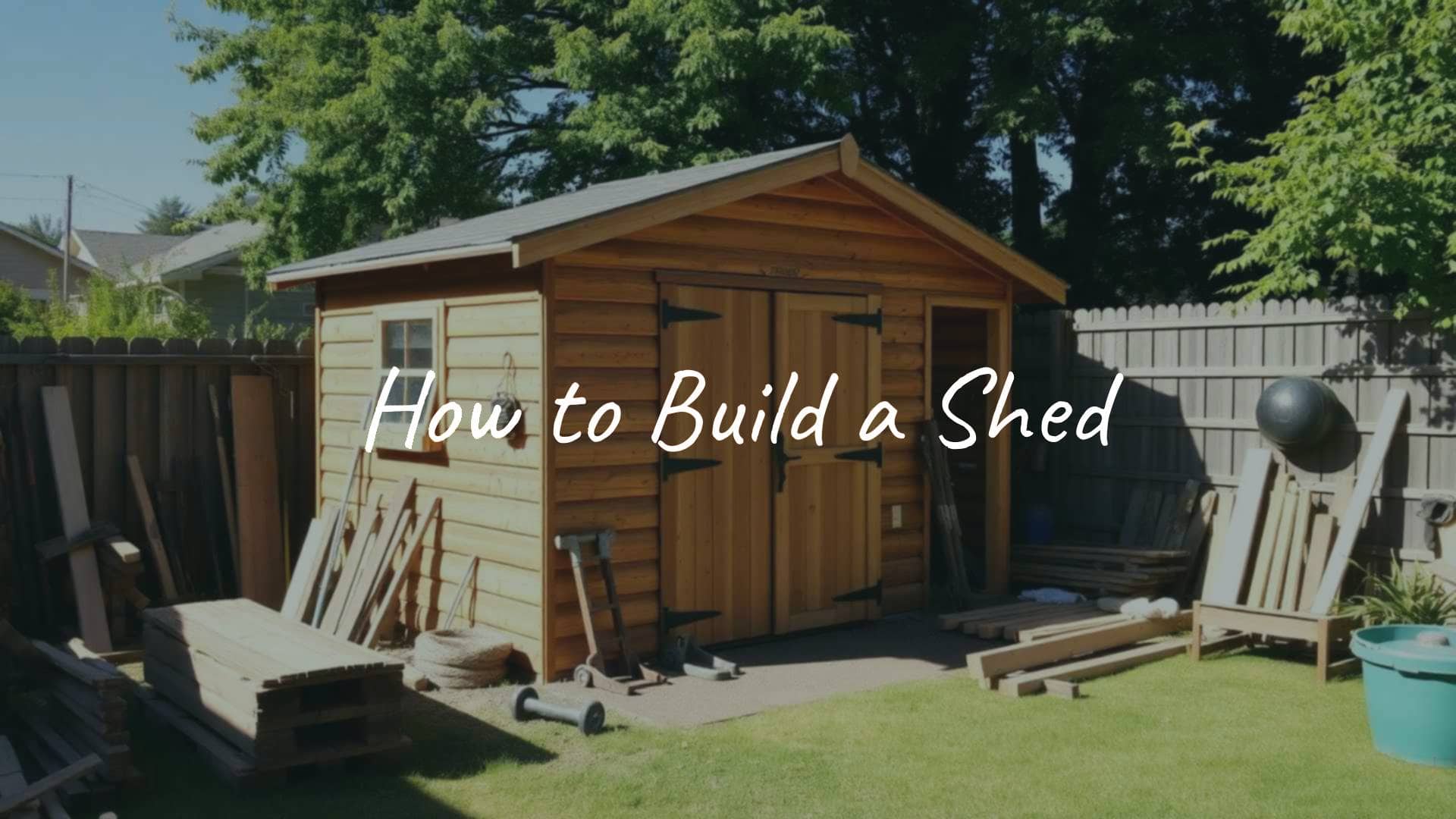
To build a shed, follow a clear step-by-step process. Start with planning and choosing the site, then build a solid foundation, frame the floor and walls, and finish with a weather-resistant roof and siding. By breaking the work into stages-foundation, framing, and finishing-you can build a strong shed that gives you storage or workspace and adds value to your property. The job does call for good DIY skills and several power tools, but a clear guide helps you get a sturdy, long-lasting result.
Precision matters at every stage. A level foundation and square walls make everything that follows easier. Whether you want a simple 8×8 storage shed or a larger lean-to for big equipment, the same basic carpentry rules apply: use treated lumber where wood meets the ground, plan for drainage, and always check on permits before you start building.
What to Think About Before Building a Shed
Do You Need a Permit for Your Shed?
Before you start construction, contact your local building department. In many areas, a shed is treated as an “accessory structure.” Smaller sheds-often 120 square feet or under and below a certain height-may not need a building permit, but rules differ widely by city and county. Even if a permit is not needed, zoning rules may require certain distances from property lines, fences, or your house.
If you skip a required permit, you risk fines or even being told to remove the shed. If you plan to add electricity or plumbing, separate permits and inspections are usually required. Spending a short time on the phone with a local official is a lot cheaper than losing your shed over a paperwork issue.
Choosing the Right Location
Where you place the shed has a big effect on how long it will last. Aim for ground that is already fairly level-within about six inches. Avoid low spots or the bottom of slopes where water gathers, as constant moisture can cause rot and make the foundation move. Check above you too; dense tree cover can drop branches onto the roof and constant shade can keep the shed from drying out after rain.
Access is also important. Think about what you will store inside. A riding mower needs a clear, flat route to a wide door. If the shed is a workshop, you might want it closer to your house. Before you dig for the foundation, call the buried utilities hotline. The service is usually free and helps you avoid hitting underground power, gas, or water lines.
Selecting the Best Shed Design and Size
Good sizing saves both space and money. Many builders choose an 8×8-foot shed because it fits standard lumber lengths and reduces waste. An 8-foot cube offers more room than you might expect, fitting bikes, a mower, and a wheelbarrow. If your yard is narrow, a 4×8 lean-to that sits beside a house or fence may fit better.
Think about roof style too. A gable roof (the classic triangle shape) gives extra headroom and sheds snow well. A lean-to roof is simpler to frame and easier for beginners. Check that the door opening is wide enough for your largest item-often at least 48 inches for a garden tractor. Draw your own plans or buy ready-made ones so you can see the layout clearly and avoid changes halfway through the build.

What Materials Work Well for Sheds?
Material choice has a big impact on how long your shed will last. Any part that touches or is close to the ground should be pressure-treated (PT) lumber, including skids, floor joists, and rim joists. For wall and roof framing, regular kiln-dried 2x4s work fine as long as you cover them with proper siding and roofing. For the floor, 3/4-inch tongue-and-groove OSB or plywood gives a solid feel and stands up well to heavy loads.
For the outside, common options include T1-11 plywood or SmartSide panels. These hold up well outdoors when painted or stained. Use galvanized nails and exterior-rated screws so they don’t rust and stain your siding. In windy areas, metal hurricane ties help keep the roof firmly attached to the walls.
Estimating the Cost of Shed Construction
Building your own shed often costs less than buying a prebuilt one, but materials can still be pricey. A simple 8×8-foot shed often runs around $1,200 in materials, depending on lumber prices and the finishes you pick. This usually covers framing, siding, basic roofing, and hardware. Extras like windows, ramps, and premium shingles will raise the price.
To save money, look for reclaimed materials. Many people find cheap windows at Habitat for Humanity ReStores or similar shops. Do not try to save money by skipping pressure-treated lumber on the base or by cutting corners on the foundation. Using regular wood at ground level may save a little now but can ruin the shed in a few years when the floor rots.
Tools and Materials Checklist for Shed Construction
Essential Tools for Building a Shed
You don’t need a full carpentry shop, but a few power tools make the job much easier. A circular saw with an adjustable base is your main cutting tool. A miter saw is very handy for fast, accurate cuts on studs and trim. Have both a corded drill (for drilling) and a cordless driver (for screws). Many DIY builders prefer screws over nails because you can remove them if you make a mistake.
Measuring and leveling tools matter just as much. You’ll need a 4-foot level or longer, a framing square, and a good tape measure. For ground prep, a shovel, pick mattock, and hand tamper help you move and compact soil. If you plan to install your own roofing, a hammer stapler for felt paper and a pneumatic brad nailer for trim can save a lot of time.
Full List of Required Building Materials
A typical shed uses a wide range of materials. For the base, get 4×6 or 4×4 pressure-treated skids and 2×6 PT joists. The floor usually takes two or three sheets of 3/4-inch plywood or OSB. For walls, plan on around fifty 8-foot 2×4 studs plus several sheets of T1-11 or SmartSide siding. The roof needs 7/16-inch OSB sheathing, roofing felt, metal drip edge, and at least three bundles of shingles for an 8×8 shed.
Hardware completes the build. You’ll use 3-inch exterior screws for framing, shorter screws for the floor, and galvanized nails for siding and roofing. Add door hinges, a latch, and any windows you plan to install. Don’t forget consumables: construction adhesive for foundation blocks, caulk for joints and seams, and exterior paint or stain for finishing.
Preparing the Site for Your Shed
How to Clear and Level the Ground
Start by removing grass, roots, and debris from the area. Use a spade to cut off the top layer of sod; if left in place, it will rot and lead to an uneven base. After clearing, compact the soil with a hand tamper so it’s firm and stable. If the site slopes slightly, either dig into the high side to make a level area or plan to use blocks and risers to support the low side.
After packing the soil, spread a layer of gravel. Gravel improves drainage and keeps water away from the wooden skids. It also doesn’t compress much over time. A 2-4 inch layer of crushed stone makes a stable, well-drained pad that helps your floor frame last longer.

Tips for Marking Out the Shed’s Perimeter
To keep your shed square, mark the footprint carefully. Drive stakes at the corners and run string between them to outline the shape. To check for square, measure diagonally from one corner to the opposite, then measure the other diagonal. If both measurements match, your layout is square.
Place the stakes about six inches outside the finished footprint. This gives you room to dig and place blocks without knocking the stakes over. When you’re happy with the position and measurements, use marking paint to trace the final outline on the ground for easier reference while setting the foundation.
Building a Solid Shed Foundation
Types of Shed Foundations
You can support a shed in several ways, depending on soil conditions, local rules, and budget. The most common method for DIY builders uses concrete deck blocks (pier blocks) set on gravel. For smaller sheds or very flat ground, some people lay pressure-treated 4×6 skids directly on a gravel pad. This “on-grade” setup is simple and lets air flow under the shed.
For areas with strong winds, earthquakes, or for very large sheds, you may need a more permanent base. This might mean digging deep post holes below the frost line and pouring concrete piers, or casting a full concrete slab. These options cost more and take more work, but they offer very stable support and better protection from ground moisture.
How to Choose a Foundation Type
Pick a foundation method based on your yard’s slope and how you plan to use the shed. If the grade is fairly flat (within 6 inches), concrete deck blocks on gravel are usually the easiest and fastest choice. If you have more slope-such as a 12-inch difference from one side to the other-you might use a mixed system: partially buried blocks on the high side and taller risers on piers on the low side.
Weight also matters. If you’ll park a heavy tractor or run heavy equipment, a concrete slab is often best because it doesn’t flex under load. For standard garden storage-bikes, tools, and a push mower-a wood floor on blocks is usually fine and easier for one person to build.
Step-by-Step Foundation Installation
Begin by finding the highest corner of the site. Set your first concrete block there. Dig down about 5 inches, fill the hole with crushed stone, and compact it. Place the block on top and level it. Use a straight board and a level to set the other corner blocks to the same height, adding or removing gravel until everything lines up.
On an 8×8 shed, place support not only at the four corners but also at the midpoints of each side. This keeps joists from sagging over time. When all the blocks are in place and level, check the diagonal measurements again. Even a small error at the base can cause big problems later when framing walls and setting the roof.

Framing and Installing the Shed Floor
How to Assemble the Floor Frame
The floor frame is like the base frame of your shed. Use 2×6 pressure-treated boards for rim joists and joists. Space the joists 16 inches on center for a strong floor. Cut the rim joists to size and mark joist locations on the inside edges. Marking an “X” on the side where each joist goes helps avoid mix-ups during assembly.
Fasten the joists to the rim pieces with 3-inch exterior screws. For extra strength, you can double the rim boards and overlap them at the corners. This creates a very solid frame that can handle heavy loads. Once built, set the frame on the foundation blocks and check the diagonals to confirm it is square.
Attaching Plywood or Floor Boards
After you have a square, level frame, install the subfloor. 3/4-inch tongue-and-groove OSB is a good choice, as the edges lock together and resist shifting. Before laying sheets, run a bead of subfloor adhesive along the joists to help prevent squeaks later on.
Start with the first sheet in a corner so its edges line up with the frame. Fasten it with 1-1/2-inch or 2-inch screws every 8 inches around the edges and every 12 inches in the field. For larger sheds, stagger the seams in the second row so they don’t line up with seams in the first row. This pattern stiffens the whole floor.
Wall Construction and Assembly
Framing Shed Walls
Wall framing is when the structure starts to look like a shed. Most walls use 2×4 studs spaced 24 inches on center, though 16-inch spacing is better if you plan to hang heavy shelves. Build each wall flat on the floor. Each wall has a bottom plate, vertical studs, and a top plate. Check each stud for a natural curve and face them all the same way so the wall stays straight.
On a lean-to design, the back wall is often shorter than the front to create roof slope. For a gable roof, the two side walls are usually the same height, with front and back walls forming the gable ends. Attach studs to plates with two 3-inch screws at each joint.
How to Build Openings for Doors and Windows
Door and window openings need extra framing to carry the load above them. Instead of just leaving a gap, build a header. A simple header can be made by sandwiching 1/2-inch plywood between two 2x4s. This sits on jack studs (short studs that support the header), which attach to king studs (full-height studs running from bottom plate to top plate).
Windows also need a rough sill at the bottom of the opening. Always follow the manufacturer’s rough opening sizes for doors and windows. Make openings slightly larger-around 1/2 inch wider-so you can adjust and shim units into place. A tight opening that’s too small is much harder to fix later.

Raising and Securing the Wall Frames
Raising the walls is easier with help. Start with the back wall. Lift it, line up the bottom plate with the floor edge, and fasten it to the floor with 3-inch or 4-inch screws driven into the joists. Use fasteners approved for treated lumber. Brace the wall with a diagonal 2×4 to keep it plumb while you set the next wall.
Raise the side and front walls and screw the corners together where studs meet. This ties the walls into a single frame. After all walls are upright and plumb, add a second top plate. Overlap the joints at the corners to tie the walls together firmly and create a solid base for the roof framing.
Adding Siding, Doors, and Windows
Installing Exterior Wall Siding
Siding gives your shed both strength and weather protection. Many people attach siding while walls are still lying flat. The factory-straight edges of the siding help pull the frame into square. Let the bottom of each panel extend about an inch below the bottom plate so it covers the floor frame and protects it from water.
If you side the shed after the walls are raised, start at one corner and work your way around. Use galvanized nails or exterior screws spaced 8-12 inches along studs. On grooved panels like T1-11, try to align the grooves at corners for a clean look. Seal vertical seams and joints with exterior caulk before painting or staining.
Building and Mounting Shed Doors
You can install a factory-made prehung door or build one yourself. A simple homemade door can use the siding panel you cut out of the wall opening. Add a 2×4 frame on the back in a “Z” or “X” pattern to keep it from sagging while staying fairly light.
Hang the door with at least three heavy strap hinges, or four for a large or heavy door. Leave a small gap-about 1/8 inch-on all sides so the wood can expand and still move freely. Add a strong latch or locking handle, and finish the opening with trim to cover gaps and give a neat appearance.
Installing Windows and Shutters
Windows let in light and fresh air, which makes the shed more comfortable. For a salvaged window, set it in the rough opening, level it, and fasten it through the flange or frame. You can also build simple shutters from 1×3 boards or similar lumber. Shutters can be decorative or built to close over the glass for extra security when you’re away.
After securing the window, apply caulk around the outside edges to stop leaks. Install trim boards (often 1×3 or 1×4) to cover cut edges and create a finished look. If the window opens, add a screen to keep out insects and small animals while still allowing airflow.
Roof Installation and Protection
Framing the Roof: Rafters and Trusses
Roof framing looks complicated but follows simple rules. For a gable roof, many builders assemble trusses on the shed floor using a jig so each one matches. A basic truss uses two rafters meeting at the peak with a bottom piece (collar tie or bottom chord) to keep them from spreading. A common slope for sheds is 4/12 (4 inches of rise for every 12 inches of run), which is around an 18.5-degree angle.
Another method uses individual rafters and a ridge board. Each rafter needs a “bird’s mouth” cut so it rests flat on the top plate. Space rafters or trusses 24 inches on center and line them up over wall studs when possible. Fasten them with screws driven at an angle or use metal hurricane ties for added strength.

How to Attach Plywood Roof Sheathing
Once rafters or trusses are in place, cover them with OSB or plywood, 7/16 or 1/2 inch thick. Start at the bottom and work up to the ridge. If you have roof overhangs, extend the sheathing to the ends of the rafters. Nail every 8 inches along rafters using galvanized 8d nails.
On larger roofs, stagger panel seams so they don’t line up in a straight line. This helps stiffen the roof. Be careful working above ground; even low roofs can be dangerous. Use a stable ladder and, if possible, have a helper pass sheets up to you so you don’t need to carry them up the ladder alone.
Applying Shingles or Roofing Panels
Before shingles, install asphalt roofing felt (#15 or #30). Start low and overlap each row by about 2 inches so water flows down and off. Along the eaves, you’ll also have drip edge metal (installed before felt there). After felt, install a starter strip of shingles along the bottom, often made by cutting the tabs off a regular shingle row.
Install shingles in overlapping rows, staggering the joints between tabs. Most 3-tab shingles show about 5 inches of each shingle once installed; follow the marks on the shingle to keep rows straight. Cover the ridge with cap shingles. If you choose corrugated metal instead of asphalt, attach the panels with screws that have rubber washers to keep water out.
Adding Roof Trim and Drip Edges
Drip edge is L-shaped metal that keeps water from curling under the shingles and soaking the fascia. Install it along the lower edges of the roof before the felt, and along the sloped sides after the felt. This small step greatly improves protection against water damage.
Use 2×4 or 1×4 boards for fascia and trim. Pre-painting these boards before you install them can save time later. Leave a small space between the drip edge and fascia so water falls clear of the wood and onto the ground (or into gutters), instead of running back along the boards.
Should You Add Roof Ventilation?
Roof vents help control heat and moisture inside the shed. Without ventilation, summer heat can damage tools and stored items, and winter moisture can lead to mold and rot. Simple gable vents at each end of the shed often provide enough airflow.
In hotter areas, you might add a ridge vent along the peak or a small solar-powered fan. At a minimum, let air enter at the soffits (under the eaves) and leave through gable or ridge vents. This steady flow of air improves comfort and helps protect what you store.
Finishing Touches for Durability and Organization
Painting or Staining the Shed Exterior
Exterior paint or stain protects the wood from sun and rain. Use quality exterior latex paint or a solid-color outdoor stain. A primer coat is helpful on OSB so the finish sticks well. Many people choose one color for the main walls and another for trim to make the shed stand out in the yard.
Coat the inside floor as well. A heavy-duty deck paint or floor coating on the OSB makes it water-resistant and easier to clean. Two thick coats from a single gallon of good floor paint usually give a hard-wearing surface that handles mud, spilled oil, and daily use.
How to Add Shelving or Tool Storage
Good storage makes the shed more useful. With open studs inside, it’s simple to add shelves. Screw 2×4 cleats to the studs and lay plywood on top for strong, deep shelving. For long-handled tools, cut 2-inch PVC pipe into short pieces, notch them, and screw them to studs to make holders for shovels, rakes, and brooms.
Pegboard is great for hanging small tools like wrenches and screwdrivers. If you have room above head height, build a loft between roof ties for items you use less often, such as holiday decorations or camping gear. This keeps the main floor open.
Optional Features: Ramps and Gutters
If you plan to roll mowers, carts, or wheelbarrows inside, add a ramp. Build it with a 2×4 frame and pressure-treated deck boards. Attach it just below the door threshold. Keep the slope gentle enough that you can push a loaded wheelbarrow or drive a mower up without slipping. For better grip, use non-slip paint or adhesive strips.
Gutters are helpful for handling rainwater from the roof. They move water away from the foundation so the ground doesn’t get soggy and the blocks don’t shift. You can even run the downspout into a rain barrel to collect water for your garden.
Common Mistakes to Avoid When Building a Shed
A very common mistake is building on an uneven base. If the foundation isn’t level, everything above it will be off. Problems like doors that don’t close right or roof lines that don’t meet evenly at the peak usually start with a crooked base. Spend extra time getting the foundation level before moving on.
Another frequent issue is poor moisture control. This includes skipping pressure-treated lumber on the base, leaving out drip edge, or not adding enough ventilation. Wood will last for many years if it can dry out, but it fails quickly if it stays wet. Give your shed a good roof, a dry base, and some airflow, and it should stay strong and useful for a long time.










![What to with Scrap Metal? [infographic]?](https://facts-homes.com/wp-content/uploads/2019/07/645413-POPYOV-391-120x86.jpg)