

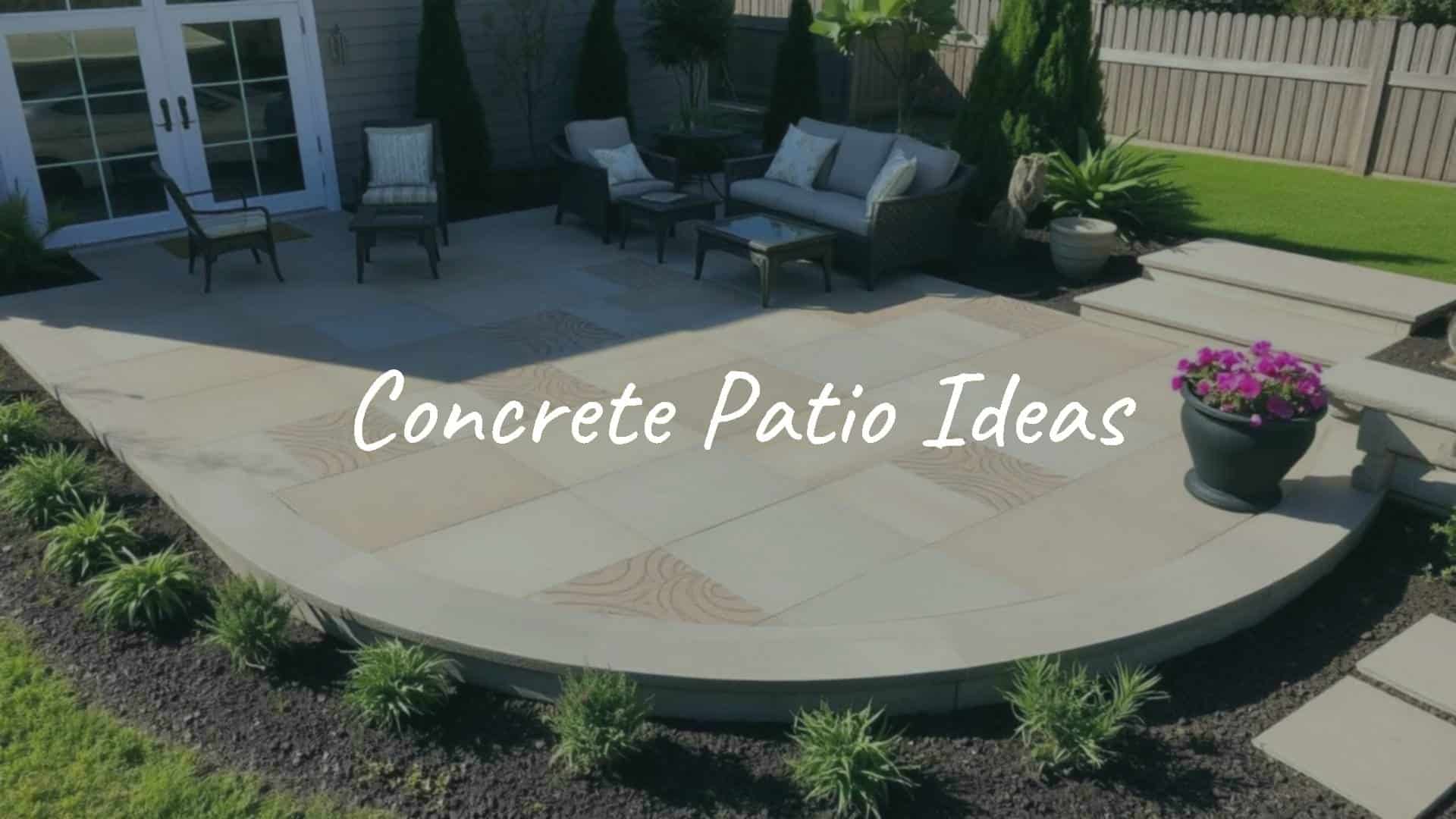
If you are searching for practical and stylish concrete patio ideas, concrete gives you huge design freedom. You can turn a plain grey slab into a smart, useful outdoor area with methods like stamping, staining, and thoughtful landscaping. Today’s concrete patio designs range from smooth, modern surfaces that feel like gallery floors to rustic, stamped patterns that copy the look of natural stone, wood planks, or cobblestone. Add features like built-in fire pits, geometric layouts with grass between slabs, and good lighting, and you get a long-lasting outdoor space shaped around how you live.
Modern concrete patios are more than a place to park a grill. They can act as the base for a full outdoor living area. You might like a Mediterranean-style courtyard with fan-shaped patterns, or a simple Scandinavian look with straight lines and a roof extension. Concrete can handle both, while staying flexible in design and friendly to your budget. The sections below explain how to plan, design, and care for a concrete patio that raises both your home’s value and its visual appeal.

What is a concrete patio?
A concrete patio is a flat outdoor surface made by pouring a mix of cement, water, and stone or sand into a framed area. Unlike porches or decks, which are often raised and built from wood, a concrete patio usually sits right on a prepared, level base on the ground. Its main job is to provide a strong, steady area outside for eating, entertaining, or just relaxing.
The old idea of concrete as a basic grey slab has changed. Today, people see concrete as a decorative material. New products like HD2+ bring brighter color and lower absorption, so concrete is now a popular pick for homeowners who want the look of expensive stone or tile without the higher cost or heavy upkeep. It is a permanent surface that can be formed into many shapes, so it can fit the exact outline of your yard.
Concrete patios vs. other patio materials
When you compare concrete with materials like wood, natural stone, or brick, the differences in lifespan and care stand out. Wood decks have a warm look, but they can rot, attract termites, and suffer from water damage. They often need regular staining and board replacement. Natural stones like bluestone or travertine look beautiful, but the material and skilled labor make them very expensive.
Concrete sits in the middle, giving you the strength of stone with the flexible design of a poured surface. Unlike individual bricks or pavers that can shift and grow weeds in the joints, a poured concrete patio is one solid piece. Even when you use concrete pavers instead of a slab, they tend to be more consistent and easier to install than uneven flagstone, and they create a flat, easy-to-walk-on surface that stays level over time.
Benefits of choosing a concrete patio
The biggest plus of concrete is how tough it is. It can handle harsh weather, from freezing winters in northern states to very hot summers, without warping or rotting. After it is installed, the care is simple. Regular cleaning and sealing every so often is usually enough to keep it looking good for many years.
Concrete is also very budget-friendly. You can get the look of slate, marble, or other high-end finishes at a much lower price. Because it is poured on site, you can easily create curves and custom shapes that would cost much more in stone. On top of that, concrete is relatively eco-friendly. It uses widely available materials and can be recycled at the end of its long life.
Design factors to think about for a concrete patio
Good planning before you pour any concrete helps the space look nice and work well. Start by deciding how you will use the patio most days. Is it for big summer gatherings, or a quiet corner for coffee and reading? Your answers will guide the size, shape, and layout.
Size, layout, and traffic flow
People often make patios too small. If you want an outdoor dining area, you need enough room for a table and chairs, plus space to walk around even when chairs are pulled out. For lounge areas, plan around the space needed for loungers or a sectional sofa. If children will play there, leave a smooth, open area so they can bike, run, or play games.
Traffic flow matters just as much. Think about the most natural route from your back door to each zone. Avoid tight spots where guests have to squeeze around furniture. Clear paths, maybe marked by different textures or borders, can help with safety and make the yard feel better organized.
Drainage and slope requirements
Good drainage is key to a long-lasting concrete patio. Concrete does not let water soak through, so you need a way for water to move off the surface. If water sits near your foundation or on the slab, it can cause damage or create slippery spots. A proper install includes a gentle slope-usually about one inch of drop over every four to eight feet-to guide rainwater away from the house.
On large, flat patios, you may also need drains built into the slab to collect water. This helps the surface dry faster, even during heavy storms. Taking care of drainage at the start helps you avoid mold, stains, or icy patches in winter later on.
Blending with landscaping and home architecture
Your patio should feel like part of your home design, not a random add-on. For modern homes, smooth finishes and simple patterns in cool grey tones look good. For older or more rustic houses, stamped concrete that copies wood, cobblestone, or irregular flagstone in warm browns and tans can be a better match.

Landscaping plays a big part in softening the look of concrete. Shrubs, flowers, and groundcover around the edges help break up straight lines. You can also leave cut-out areas inside a large patio for trees, flower beds, or tall grasses to make the space feel more natural and less like one big slab.
Choosing between slabs, pavers, and tiles
You can build a concrete patio in a few main ways. A poured slab is the classic choice. It is usually the least expensive and gives you one smooth, strong surface. Concrete pavers, on the other hand, are separate pieces that fit together like a puzzle. They are easier to replace if one cracks or stains. Pavers come in many shapes, from simple rectangles to hexagons and large stones that look like real rock.
Concrete tiles are another option, often used to create patterns or checkerboard designs. While slabs are solid, pavers and tiles sit with small gaps and have a bit more movement, which can help in areas where the ground shifts. Your choice depends on budget, soil conditions, and the style you prefer.
Popular concrete patio ideas and styles
Concrete can fit almost any look you want. By changing the finish and color, you can move from “old European courtyard” to “sleek city rooftop” without changing the material itself.
Stamped concrete for stone and brick looks
Stamped concrete is a favorite for people who want the look of stone or brick without the high cost. Heavy stamps press patterns into the wet concrete to copy textures like Ashlar Cut Slate, London Cobble, or Roman Slate. With multiple colors and antique-style stains, contractors can build depth and shadows that make the surface look very close to real stone or brick.

Textured and exposed aggregate finishes
Exposed aggregate is a classic finish where the top layer of cement paste is washed away to show the small stones inside. This gives a textured, slip-resistant surface that works well around pools and in high-use areas. Other textured finishes can copy sandstone or slate, giving you a softer look with better grip than a smooth slab.
Colored and stained concrete options
Concrete patios do not have to be plain grey. You can add color into the mix for an even tone, or apply stains later to create varied, rich color. Popular shades include soft greens, cool greys, and warm browns. Staining can create a marbled effect, adding depth and warmth to the patio.
Polished and smooth surface designs
Polished concrete is becoming popular for a clean, high-end look. Installers grind the surface until it has a smooth, shiny finish that reflects light. It is easy to clean and works well with modern architecture, especially in cities where people like simple, streamlined designs.
Geometric, curved, and multi-level layouts
You are not limited to simple rectangles. Curved patios soften the hard lines of a house and create a more relaxed feel. On sloped lots, multi-level patios use steps and platforms to carve out separate spaces for cooking, eating, and lounging. This makes the yard feel more organized and can help small spaces seem bigger.
Checkerboard patterns with grass or groundcover
If a large slab feels too plain, try a checkerboard layout. This involves setting big concrete squares with spaces between them, then filling those gaps with grass, artificial turf, or groundcovers like creeping thyme. This grid effect breaks up the hard surface, helps water soak into the soil, and adds a bold, modern look.

Wood-look and plank-style concrete
If you love the look of a wood deck but dislike sanding, staining, and rot, wood-look concrete is a smart compromise. Special stamps copy the grain, knots, and lines of real planks. You get the cozy, rustic feel of wood with the long life and fire resistance of concrete.
How to personalize a concrete patio
After you plan the basic slab, the right details will make the patio feel like it belongs to your home. Building some features into the concrete at the start saves money and keeps the design consistent.
Incorporating planters, borders, and raised beds
You can pour concrete planters at the same time as the patio for a seamless look. They link the hard surface with your garden and can frame views or seating areas. Patterned borders around the edges also help define the space. Using a darker or lighter color for the border than the main slab can make the outline stand out.
Adding fire pits, fireplaces, and water features
A fire pit area is a popular addition, making the patio comfortable on cool nights. It can be a sleek gas bowl or a more traditional fireplace with stone facing. Small waterfalls, fountains, or narrow “stream” features built from concrete and rocks bring the calming sound of water into your yard and add a relaxing feel.

Integrating built-in seating and furniture
Built-in concrete benches or low walls used as seating help make the most of your space and keep the layout clean. You can top them with stone or wood for comfort and style. Permanent seating means fewer loose chairs and a clear place for guests to gather.
Using lighting and embedded accents
Good lighting improves both safety and mood. You can set LED strips into steps or borders so people can see paths after dark. Some mixes include glow-in-the-dark stones that charge in daylight and give off a soft glow at night. You can also press designs like compass roses or stars into the surface to create custom focal points.
Installing pergolas, shade structures, and outdoor kitchens
To use your patio more often, add shade and cooking areas. A pergola or roof extension helps block sun and rain and gives climbing plants somewhere to grow. An outdoor kitchen with concrete counters, a built-in grill, and maybe a fridge or tap station turns the patio into a full entertainment area. Use cabinets and finishes made for outdoor use so they stand up to sun and moisture.
Creative decor and furnishing ideas for concrete patios
Decor and furniture give your patio comfort and personality. Because concrete can look hard or cool, aim to add warmth, color, and texture.
Softening the look with outdoor textiles
Outdoor rugs are an easy way to change the feel of a patio. They add softness, color, and pattern, and you can swap them out when you want a new style. Pair them with cushioned chairs and sofas, plus durable outdoor pillows and throws in bright or patterned fabrics to make the space feel as cozy as an indoor room.

Arranging furniture for style and function
Group seating to encourage conversation. Arrange chairs and sofas in a circle or U-shape around a coffee table or fire pit. For dining, leave a clear route between the table and the grill or kitchen zone. Choose flexible pieces, like ottomans that work as extra seating or side tables, so the layout can change for small family nights or larger gatherings.
Incorporating plants for color and privacy
Plants help soften concrete and add life. Use tall shrubs, bamboo, or climbing vines on a pergola to create privacy and a “green wall” effect. Large pots with bright flowers bring color, while ornamental grasses sway in the breeze and contrast nicely with the solid patio surface.
Seasonal updates for year-round appeal
Change small details with the seasons. In fall, mix grey concrete with orange and yellow mums and rustic decor. In winter, add patio heaters, string lights, and thick blankets to keep the area usable. In summer, use tropical plants, bright cushions, and umbrellas to create a cool, lively setting.
Cost factors for concrete patio projects
Setting a clear budget is an important step for any outdoor project. While concrete itself is usually affordable, design choices and site conditions affect the final cost.
Factors influencing cost
Your total price depends on:
- Patio size (square footage)
- Local concrete and labor rates
- Finish type (simple broom finish vs. stamped patterns)
- Number of colors or stains used
- Site prep needs, like demolition, grading, and drainage work
Comparing basic vs. custom concrete designs
A plain concrete slab with a broom finish is the least expensive choice. If you want a more decorative look, stamped concrete usually runs around $12-$25 per square foot. Multi-color stains, borders, and custom patterns cost more at the start, but they can greatly improve curb appeal and may increase your home’s resale price.
Is a concrete patio cheaper than alternatives?
In many cases, yes. Concrete is often much cheaper than natural stone, brick, or premium wood decking. It takes less labor than laying individual stones and holds up much longer than wood, which means fewer repair and replacement costs over time. This long life makes it a smart investment.
DIY vs. professional installation: what to know
Some homeowners like to handle projects themselves, but concrete is tricky. It sets fast and mistakes are hard to fix once it cures.
When to hire a contractor
For small, basic slabs, a skilled DIYer might manage the work. For big patios, stamped patterns, or multi-level designs, hiring a contractor is usually the better choice. Pros know the right timing for finishing and stamping, how to keep color even, and how to control the pour to reduce cracking.
Common DIY mistakes and how to avoid them
Typical DIY errors include using too much or too little water in the mix, skipping control joints, and poor base prep. To reduce problems, start with a firm, level base and use a quality mix, possibly with fiber reinforcement to help limit cracks. If you already have a slab, you can try a stamped overlay product instead of pouring a full new patio, but it is still wise to start with small areas.
Maintenance tips for concrete patios
Concrete patios are fairly low-maintenance, but some simple steps help them last for decades.
Routine cleaning and stain removal
Sweep or blow off dirt and leaves on a regular basis. For deeper cleaning, use a pressure washer or strong spray nozzle with mild soap. Clean up spills quickly so they do not soak in and stain. Products like Neutra Clean can help lift tough grime without harming the surface.

Preventing cracks and weather damage
Concrete will naturally move a little as the ground shifts and temperatures change, which can lead to small cracks. Control joints-planned cut lines in the slab-guide these cracks so they stay less visible. In cold climates, using mixes that resist de-icing salts and keeping the patio well sealed helps protect it from freeze-thaw cycles.
Sealing and resurfacing advice
Sealing is one of the most important care steps. A good sealer protects against sun damage, stains, and moisture. Plan to reseal your patio every two to three years, or as recommended by the product. If the surface starts to look worn or dated, you can often apply a thin overlay or resurfacing product instead of tearing the patio out, giving it a fresh new look.
Common questions about concrete patios
Here are answers to some frequent questions homeowners ask about concrete patios.
How long does a concrete patio last?
With good installation and basic care, a concrete patio can last 25-30 years or more. Many last even longer if they are sealed on a schedule and built on a firm, well-prepared base. They usually outlast wood decks and many types of pavers that can move or break.
What are the disadvantages of a concrete patio?
Concrete can develop hairline cracks as the ground settles. It can also feel cold or hard underfoot, especially in winter. If you use a very smooth finish with a glossy sealer and no grit, it can be slippery when wet. Many of these issues can be reduced by adding texture, using non-slip additives, and hiring an experienced installer.
Are concrete patios slippery?
The concrete itself is not usually very slippery, but some sealers can make the surface slick. To improve grip, especially around pools, you can mix an anti-slip product like Traction Grip into the sealer. Choosing a textured finish, such as a broom finish or exposed aggregate, also helps create a safer, more slip-resistant surface.
Does a concrete patio add value to your home?
Yes. A well-planned and well-kept concrete patio can raise your home’s appeal and resale value. Buyers often see a nice outdoor living area as an extra room, which can help your property stand out when it is time to sell.
Looking ahead, more patios now mix style with smart tech and greener materials. Homeowners are adding app-controlled lighting and irrigation systems for built-in planters. New concrete mixes that trap carbon are also gaining interest, helping lower the environmental impact of building. As outdoor and indoor areas blend together in modern homes, the concrete patio remains a flexible base for daily life and gatherings, ready to support years of memories outside.











![What to with Scrap Metal? [infographic]?](https://facts-homes.com/wp-content/uploads/2019/07/645413-POPYOV-391-120x86.jpg)