

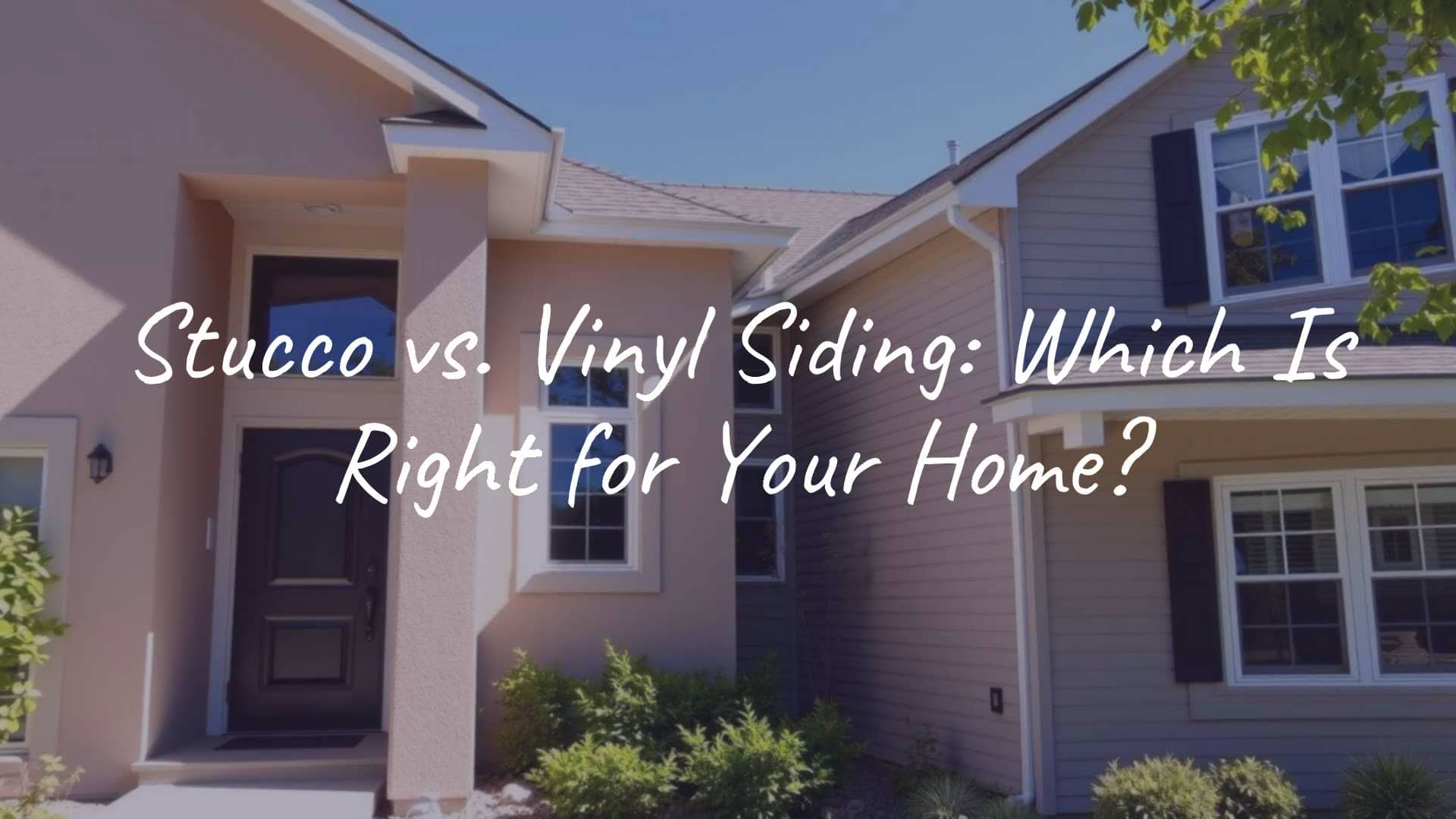
Choosing how to cover the outside of your home often comes down to a common question: stucco or vinyl siding? Both protect your house from weather and strongly affect how it looks and how much it is worth over time. The big differences between stucco and vinyl siding are in what they are made of, how they are installed, how long they last, how you care for them, what they cost, and how they look. Stucco is a traditional cement-based plaster that creates a smooth, often textured surface. Vinyl siding is made from PVC and comes in panels, offering many colors and styles. Each option has its own pros and cons that fit different budgets, climates, and design tastes, so the “better” choice depends on your situation and what matters most to you.
This article gives a clear, side-by-side comparison of these two common exterior choices, looking at what they are, their benefits, and their downsides. We’ll compare how they look, how long they last, energy performance, upkeep, and environmental impact. With this information, you can choose the option that fits your needs, so your home stays protected and looks good for many years.
Stucco vs Vinyl Siding: Comparing Popular Home Exterior Options
What are the main differences between stucco and vinyl siding?
The core differences between stucco and vinyl siding start with what they are made of and how they go on your house. Stucco is a plaster-like mix of cement, lime, sand, and water. It is applied in several coats to form a solid, single-piece surface. The work is very hands-on and takes time, but it creates a smooth, often textured finish that feels classic and permanent. Vinyl siding is a factory-made product from polyvinyl chloride (PVC) resin. It comes in interlocking strips or panels. This makes it light, flexible, and much faster to install.
They also differ a lot in looks, upkeep, and performance. Stucco gives a classic look, often seen on Mediterranean or Southwestern homes, with limited but attractive options in texture and color (added with tint or paint). Vinyl siding offers a huge range of designs and colors, with many shapes and profiles, including versions that imitate wood or stone. Stucco care often involves checking and fixing cracks and watching for moisture issues. Vinyl siding usually only needs simple cleaning. These basic differences help decide which one works best for certain climates, budgets, and style preferences.
When should you choose stucco over vinyl siding?
Stucco works especially well in certain situations, so it is a strong choice if you want a specific look or performance feature. It is ideal if you want a smooth, continuous, classic exterior, especially for Mediterranean, Spanish, or Tuscan-style homes. Its thick, solid surface gives a distinct, upscale appearance that many people like.
Stucco also performs well in hot, dry areas. Its mass helps balance indoor temperatures and can keep interiors cooler in strong heat. It is naturally fire-resistant, which makes it popular in areas where wildfires are a concern. While stucco costs more to install and takes more labor, it can last over 50 years with good care and resists pests and rot very well. For homeowners who want a long-lasting, high-end exterior and are thinking about resale value, stucco can be a smart long-term choice.
When is vinyl siding a better option than stucco?
Vinyl siding is often the better pick if you care most about budget, easy care, and flexible design. It usually costs less than stucco for both materials and labor, making it appealing if you want to upgrade your exterior without spending as much. Because it is light and simple to install, the job often finishes faster and with lower labor bills.
If you want as little maintenance as possible, vinyl siding is hard to beat. It does not need painting or staining, and its built-in color holds up well, usually needing only occasional washing with soap and water. New insulated vinyl siding can also improve energy efficiency and lower heating and cooling bills. In damp or cold climates with lots of freeze-thaw cycles-where stucco can crack and let in water-vinyl often handles movement and moisture better. Its huge range of colors, textures, and profiles makes it easy to get many different looks, from traditional to modern, without the higher cost and upkeep of natural materials.
What is Stucco Siding?
Stucco siding is a long-used exterior finish, a strong plaster-like coating that has been on buildings for centuries. It is made from a simple mix of cement, sand, lime, and water that hardens into a tough, weather-resistant shell. The installation process is careful and involves several layers, usually over a metal or wood lath that supports it. These layers give stucco its smooth, continuous surface, which sets it apart from siding made of separate panels.
Many modern stucco mixes also include polymers and other additives. These help the material flex a little more so it is less likely to crack when the building shifts or temperatures change. Stucco is known for its textured finish. It can be smooth or rough and can be tinted or painted in many colors. It is often linked with Mediterranean, Southwestern, and Spanish designs, giving homes a classic, often upscale look from the street.
Benefits of stucco siding
Stucco siding has several strong benefits that keep it popular:
- Appearance: It gives a clean, continuous, often elegant look that can really improve curb appeal. Different textures and colors let you customize the finish, which can create a unique, high-end feel and help resale value, especially in areas where stucco is common.
- Durability: With good installation and care, stucco can last 50 years or more. It stands up well to many types of weather and is naturally resistant to fire, insects, and rot, forming a tough shield around the home.
- Temperature control: Because it is thick and dense, stucco provides some insulation and helps even out temperature changes. In hot climates, this can keep interiors cooler and reduce energy use. Its continuous surface also leaves fewer joints where water can get in, as long as any cracks are fixed quickly.
Drawbacks of stucco siding
Stucco also has downsides that homeowners should weigh carefully. One of the main issues is that it can crack. Even with newer mixes, cracks can still show up over time from normal settling, earthquakes, or strong temperature swings. Even small cracks can let in water, leading to mold, mildew, and other problems that can be expensive and unhealthy to fix.
Another issue is the higher cost and more involved installation. Stucco needs skilled workers and several coats with drying time between them. This adds time and labor cost, making the upfront price higher than many other siding options. For maintenance, stucco is usually called low-maintenance, but it still needs careful attention. Cracks must be repaired, and the surface may need repainting every 5-10 years to keep it looking good. In very wet or humid places, stucco can soak up water because it is porous, which can lead to more moisture problems if it is not properly sealed and maintained.
What is Vinyl Siding?
Vinyl siding is one of the most common and flexible exterior coverings on the market. Made from polyvinyl chloride (PVC), it is light, bendable, and quite tough. Unlike stucco, which goes on wet, vinyl siding arrives as pre-shaped strips or panels that lock together to form a protective shell. This panel system makes installation much simpler and usually faster than applying stucco.
The way vinyl siding is made allows for many design options. It comes in a wide range of colors, and the color is added during production, so it stays bright for a long time without needing paint. Vinyl can also be shaped to look like wood grain, shingles, or even stone, giving homeowners many style choices at a lower price than real wood or masonry. Its wide use comes from its mix of low cost, low maintenance, and varied looks.
Advantages of vinyl siding
Vinyl siding offers many clear benefits:
- Lower cost: Materials and installation are usually cheaper than stucco, so it is a good option if you want to keep expenses down.
- Easy care: It does not need painting, scraping, or staining because the color runs through the material. A rinse with soapy water from time to time usually keeps it looking clean.
- Moisture and pest resistance: It does not rot and is not attractive to insects, making it practical for many climates.
- Energy savings (with insulated options): Many products have foam insulation attached to the back. This reduces heat loss through wall studs and helps keep indoor temperatures steady, which can lower utility bills.
- Weather resistance: Quality vinyl can handle wind, hail, and most everyday weather without warping, cracking, or fading quickly.
Disadvantages of vinyl siding
Vinyl siding has limits that you should think about. One concern is how it reacts to extreme conditions. Very high heat can cause panels to warp, sag, or even melt. Hard impacts can crack vinyl, especially in cold weather when it becomes more brittle. So while it is durable overall, it may not be the best choice in places with extreme heat or very strong impact risks.
Another drawback is how some people view its appearance. Even though modern vinyl can look close to real wood or other textures, some buyers still see it as a lower-end “plastic” finish compared with stucco or fiber cement. This can affect how some buyers value the home in high-end markets. Over many years of strong sun, some colors can still lighten. From an environmental angle, PVC production uses chemicals that are less friendly to the environment, and vinyl does not break down naturally. Disposal can be a challenge, although recycling options are growing.
Stucco vs Vinyl Siding: Key Differences
Appearance and curb appeal
Stucco and vinyl siding create very different looks on a home. Stucco, with its continuous application, gives a solid, often elegant style. Its surface is usually textured, from very smooth to rough, giving a traditional, hand-finished feel that suits Mediterranean, Spanish, and Southwestern designs. Because there are no panel seams, the result is clean and polished, which many people see as upscale and timeless.
Vinyl siding, in contrast, is all about variety. It comes in many colors, shapes, and textures, including lap, Dutch lap, vertical panels, shingles, and styles that copy wood or stone. This lets homeowners create many different looks-from classic to modern farmhouse-at a lower price. While older vinyl used to look clearly “plastic,” newer products are much more realistic. Still, the seams between panels remain visible, which some people like less than stucco’s smooth, continuous surface. In the end, the decision often rests on whether you prefer a seamless textured finish or a panel-based look with more design options.
Durability and lifespan
Both stucco and vinyl siding protect the home well, but in different ways. Stucco is known for its long life. With correct installation and regular care, it can last 50 years or more. Its cement base makes it strong, hard to dent, and resistant to rot and insects. Its main weak point is cracking, which can come from building movement, quakes, or large temperature shifts. If cracks are not fixed, water can get in and damage the structure, cutting down its lifespan.
Vinyl siding usually has a shorter life than well-kept stucco-often 20-30 years, though higher-quality products can last 40-60 years. It is built to handle a wide range of weather, from heat to cold, without breaking down quickly. Vinyl is flexible, sheds water, and does not rot or attract insects. Problems may include warping or melting near high heat sources and cracking when hit hard in very cold temperatures. Stucco often wins in pure impact strength, but insulated vinyl can still be very strong against wind and storms. The main difference is that stucco depends on keeping cracks from forming or spreading, while vinyl relies on its flexibility and resistance to moisture and pests.
Insulation and energy efficiency
Both materials can help with energy use, but they do it in different ways. Stucco, with its thick dense layers, has good thermal mass. It helps slow down temperature swings, which is especially helpful in hot climates. It absorbs heat during the day and releases it slowly, which can keep interiors cooler. However, its insulation value on its own is limited in cold areas unless you add extra insulation underneath.
Vinyl siding-especially insulated vinyl-often does better as a pure insulator. Many products have foam backing attached to the panels. This adds insulation to the wall system, reduces heat loss through studs, and helps keep indoor temperatures more even. This can cut heating and cooling costs, which makes insulated vinyl very appealing if you want energy savings at a reasonable price. Plain (non-insulated) vinyl offers some protection, but insulated versions usually outperform stucco in total insulation value across most climates.
Maintenance requirements
Maintenance needs are quite different between the two. Vinyl siding is known for being very low-maintenance. It keeps its color without paint, stain, or sealer. Most of the time, you only need to rinse it now and then with a hose and mild soap to remove dirt or mildew. If a section is damaged, you can often replace just the affected panel at a modest cost.
Stucco needs more careful long-term care. Cracks are the main concern and must be fixed fairly quickly to avoid water getting behind the surface and causing moisture damage, mold, or structural issues. Patch work can be tricky because matching color and texture can require a skilled pro. Even if the stucco is tinted, many homeowners paint it, which means repainting every 5-10 years to freshen the look or cover stains. Overall, stucco demands more attention and sometimes higher repair costs than vinyl.
Cost comparison
Cost is often a big deciding factor. Vinyl siding is usually cheaper both to buy and to install. The material itself generally costs less per square foot, and its light weight and simple panel system mean fewer labor hours. Installed, vinyl siding often runs about $6-$9 per square foot, putting it among the more affordable exterior choices.
Stucco is usually a higher-end, more expensive finish. While its basic ingredients are not very costly, the detailed, multi-step application needs trained workers and plenty of time. This raises the total installed cost, which commonly ranges from $8-$14 per square foot or more, depending on design details and finish style. Although the upfront price is higher, its long life and relatively low repair needs in dry climates can balance that cost over many years, especially for homeowners who plan to stay long term.
Ease of installation and DIY potential
Vinyl siding and stucco differ sharply in how easy they are to install yourself. Vinyl siding is fairly straightforward. The light, interlocking panels are made for quick installation, and many experienced DIYers can handle the job with standard tools and basic siding accessories. Clear instructions are widely available. This simpler process cuts labor time and cost.
Stucco is much more complex and is typically not a DIY project. It involves putting up lath, then applying several wet coats (scratch, brown, and finish) with proper curing time between layers. Getting an even, durable surface with the right texture calls for training and practice, plus special tools. Mistakes can lead to cracking, poor bonding, or leaks, which are expensive to fix. Because of this, stucco almost always needs professional installation to perform well and last a long time.
Sustainability and environmental impact
Both stucco and vinyl siding have environmental pros and cons. Stucco is mainly made from natural materials like cement, sand, and lime, and it lasts a long time, which reduces how often it needs to be replaced and how much waste is created. However, making cement uses a lot of energy and releases a lot of carbon dioxide. Installation and repairs can also use a fair amount of energy and materials, depending on how the work is done.
Vinyl siding is made from PVC, which has a more debated environmental record. Its production uses chemicals that are harder on the environment, and vinyl does not break down in landfills. On the other hand, it is light, does not need painting (which reduces paint-related emissions over time), and some manufacturers now offer take-back and recycling programs. If you focus on green building, you will need to weigh stucco’s natural content and long life against vinyl’s lower weight, no-paint advantage, and growing recycling options.
Fire resistance and safety
Fire safety is an important factor for any exterior. Stucco performs very well here because it is made from cement-based, non-combustible materials. When applied in layers over metal lath, it forms a thick barrier that slows fire spread. It does not burn or add fuel to a fire, which is why building codes sometimes favor stucco in wildfire-prone areas like parts of California and the Southwest.
Vinyl siding reacts very differently to heat. It softens and melts at relatively low temperatures. While it is often formulated to self-extinguish-meaning it tends to melt and pull away from flames instead of feeding them-it can still warp and fall off when exposed to strong heat, exposing the wall underneath. Modern vinyl meets standard residential fire codes, but in areas with high wildfire risk, stucco usually offers better fire protection.
ROI and resale value
Return on investment (ROI) and resale value are major concerns for many homeowners. Vinyl siding is often rated as one of the better returns among exterior upgrades. Replacing worn siding with new vinyl can bring back a large share of the project cost at resale, sometimes around 80% or more. Buyers like its fresh appearance and low upkeep, especially when it replaces older, failing materials.
Stucco, while costlier at the start, can also add a lot of value, especially where it fits local style and expectations. In the Southwest and other stucco-heavy areas, a well-kept stucco exterior can make a home look more upscale and custom. Its long life, fire resistance, and solid feel appeal to many buyers. People may also factor in the need for crack repairs and repainting. Overall, both materials can raise resale value, but vinyl often gives a higher payback compared with its lower cost, while stucco’s value depends more on region and how buyers view its quality.
Regional suitability and climate performance
Where you live and your local climate heavily influence which siding works better. Stucco is usually best in warm, dry regions like the American Southwest. There, its thermal mass helps keep interiors cooler, and strong sun does not cause much damage. Low humidity reduces moisture issues and helps stucco reach its full lifespan with fewer problems.
In rainy, very humid, or freeze-thaw climates, stucco can struggle. Its porous surface can soak up water, which can lead to mold, mildew, and cracking as water expands when it freezes. Vinyl siding generally does well in a wide range of mild to moderate climates. It resists moisture and does not rot. While very high heat can warp it and very cold weather can make it more brittle, high-quality vinyl with UV protection and insulated backing holds up well in most typical conditions. In mixed-climate regions with both heat and cold, insulated vinyl is often a more forgiving choice, while stucco may need more careful design and maintenance to avoid moisture issues.
Which Siding Option is Right for Your Home?
Factors to consider before choosing
Picking between stucco and vinyl siding affects appearance, cost, upkeep, and comfort for years, so it deserves some thought. Key points include:
- Architectural style: Stucco naturally fits Mediterranean, Spanish, and Southwestern homes. Vinyl’s design range fits many styles, from colonial to contemporary.
- Desired look: Decide whether you want a seamless, textured surface (stucco) or a panel look with many color and profile choices (vinyl).
- Budget: Vinyl usually costs less to install. Stucco is more expensive at first but can pay off over the long term if you plan to stay and live in a climate that suits it.
- Maintenance comfort level: Vinyl asks for very little ongoing care. Stucco is tougher and long-lasting but needs more attention, especially for cracks and possible repainting.
- Climate and environment: Stucco works best in dry, warm areas. Vinyl is more flexible across different climates, especially in insulated form.
Talking to a local siding contractor who knows your area’s weather and building rules is a smart way to match these factors to your specific home.
Recommendations for different climates and budgets
Your climate and budget usually guide the final choice:
- Hot, dry, or desert climates: Stucco is often the best fit. Its thermal mass can help keep the home cooler and cut air conditioning costs. In dry conditions, its main weakness-moisture-is less of a problem, helping it last for decades with fairly limited repairs. While more expensive up front, the long life and comfort benefits can make the cost worthwhile.
- Wet, humid, or freeze-thaw climates: Insulated vinyl siding is usually a more practical, lower-risk option. It resists moisture, does not rot, and its flexibility handles temperature swings better than rigid stucco. For tight budgets, vinyl is clearly easier to afford and still offers solid performance, good looks, and very low upkeep.
A site visit and quote from an experienced local contractor can help you choose based on your home’s age, wall construction, and exposure to sun, wind, and rain.
Frequently Asked Questions About Stucco vs Vinyl Siding
Is stucco more expensive than vinyl siding?
Yes. Stucco usually costs more than vinyl siding. While the ingredients for stucco are inexpensive, the work to apply it is slow and skill-heavy, with several coats and drying times. This drives up labor cost, so total prices often land around $8-$14+ per square foot. Vinyl siding materials and labor usually fall around $6-$9 per square foot, making vinyl the more affordable option for many exterior remodels.
Which lasts longer, stucco or vinyl siding?
Stucco usually lasts longer. With proper installation and regular care, stucco often lasts 50 years or more, especially in dry climates. Its cement base makes it very sturdy. Vinyl siding generally lasts 20-30 years, though higher-quality, insulated products can reach 40-60 years. Stucco’s longer life depends heavily on prompt crack repair and moisture control, while vinyl’s life span depends more on how it stands up to sun, heat, cold, and impacts.
Can you replace vinyl siding with stucco?
Yes, you can replace vinyl siding with stucco, but it is more involved than simply covering the old material. The vinyl and any unsuitable backing must be removed first, which exposes the sheathing, framing, and insulation. This is a good time to fix any hidden damage. After that, a water barrier (such as house wrap) and a lath system (metal or foam board) are installed to support the stucco. Then several stucco coats are applied with proper curing time. This kind of upgrade can improve appearance and sometimes energy performance, but it is a large project that should be handled by experienced stucco contractors.
Does stucco add value to a home?
In many markets, yes. Stucco can add strong value, especially where it fits the local architectural style. Its smooth, textured look often reads as higher-end, especially on Mediterranean, Spanish, or Southwestern homes. Buyers may see stucco as a sign of quality because it offers a long life, fire resistance, and some temperature control. In areas where stucco is common and desirable, a well-kept stucco exterior can increase resale price compared with some other siding types.
Is stucco good for coastal or humid climates?
Stucco’s performance in coastal or very humid areas depends heavily on design, installation, and maintenance. Because traditional stucco is porous, it can soak up water in wet, salty, or humid conditions. This can lead to mold, mildew, and more cracking as trapped moisture expands and contracts. These issues are more likely in rainy, humid coastal regions.
In dry coastal areas, such as parts of Southern California, stucco usually does well. It holds up against sun and salt without much warping or fading. In wetter coastal climates, many builders prefer other materials or more advanced stucco systems with better drainage and moisture control. If you use stucco in a humid or rainy coastal zone, the work must be carefully designed and installed, followed by regular inspection and maintenance to avoid water damage.











![What to with Scrap Metal? [infographic]?](https://facts-homes.com/wp-content/uploads/2019/07/645413-POPYOV-391-120x86.jpg)