

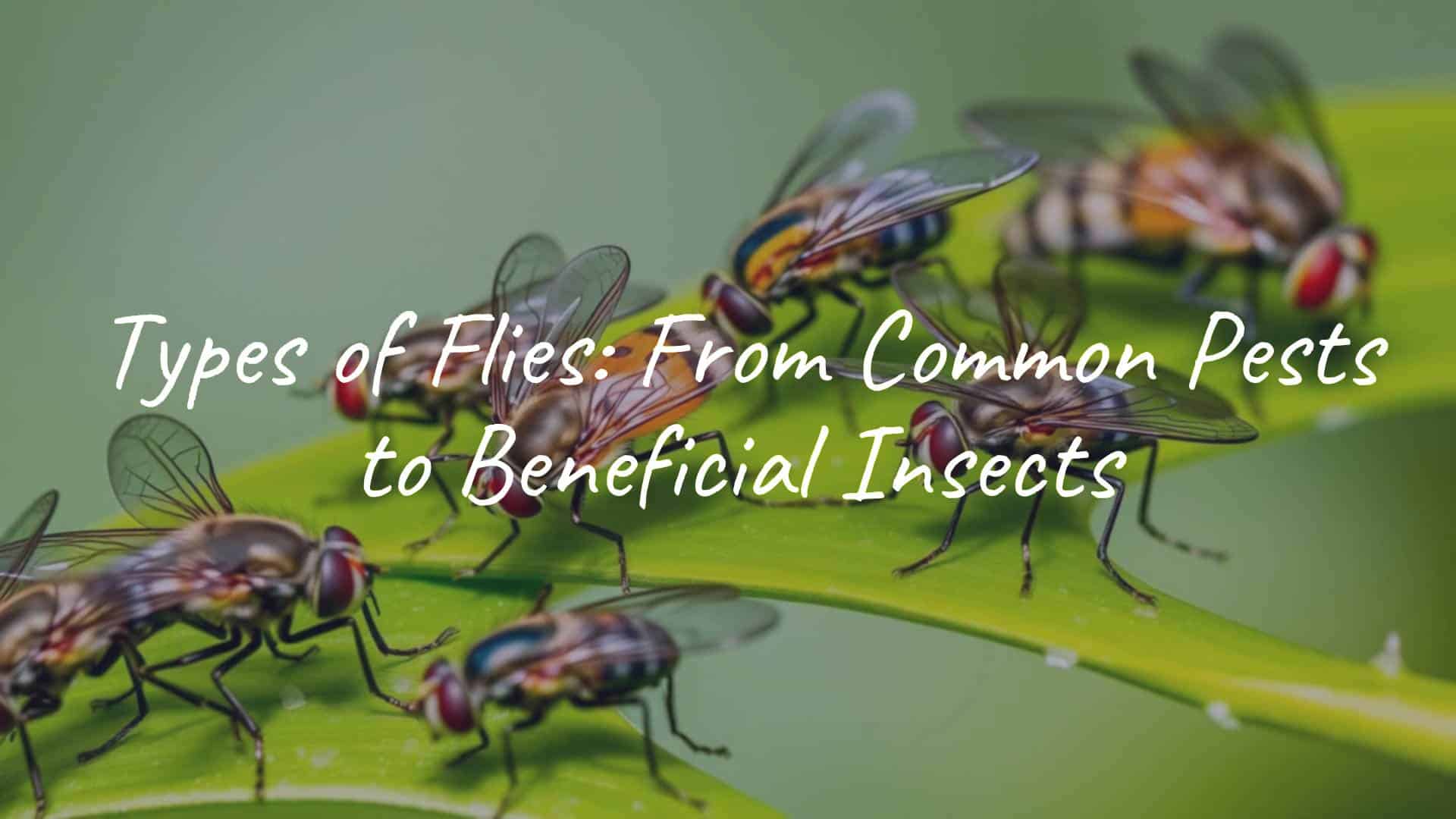
When we think about insects, flies often sound like a simple problem: an annoying buzz, or a pest linked to germs. But the question “what types of flies are there?” has a much bigger answer. Flies belong to an insect group called Diptera, which means “two wings.” This group includes a huge number of species, and they are not all the same. Different flies look different, act differently, and live in different places. Some help pollinate plants and break down dead material, while others hunt other insects or spread disease. Learning about fly types is not just for science class-it also helps you understand what they do in nature and how to deal with them when they show up where you don’t want them.

Why Do Different Types of Flies Exist?
Flies are so varied because they have changed over millions of years through evolution and natural selection. Each species found a way to survive in its own spot in nature, changing over time to fit the conditions around it. These changes usually connect to basic needs: finding food, making young, and staying alive long enough to reproduce.
Earth has many different environments-dry deserts, wet forests, farms, cities, and quiet wild areas. Each place creates different problems and different chances to survive. Over time, flies adapted to these differences, which is why there are so many kinds today. New species are still being discovered, and small differences you might not notice right away can be the exact feature that helps a fly live in a specific place.
Diet and Habitat Variation Among Fly Species
One big reason flies split into many types is that they eat many different things and live in many different habitats. A fly that drinks nectar from flowers needs different mouthparts and senses than a fly that drinks blood, or one that feeds on rotting plants and animals. Food choices shape the fly’s body and behavior.
Some flies eat plants, some eat other animals, some live as parasites, and others feed on waste. Their food can include:
- nectar, pollen, and plant sap
- rotting fruit and fungi
- dead animals (carrion)
- dung and compost
- blood or body fluids from animals

These diets affect where flies live. Fungus gnats do well in wet soil with fungi. Stable flies stay close to livestock because they need blood meals. These links between food, habitat, and body features explain why there are so many fly types, each with its own job in an ecosystem.
Main Categories of Flies
Diptera is a huge group, but one simple way to group common flies is by whether they bite. This is not just about comfort-it often connects to their role in nature and their effect on health and farming.
Non-Biting Flies
Most flies do not bite. Many of them have mouthparts made for soaking up liquids instead of piercing skin. They may feed on many things, including rotting material, garbage, fruit, flowers, and sugary liquids.
Well-known examples are house flies and fruit flies. These species often show up around dirty areas because they can breed in waste and feed on it. They can also pick up germs from filth and then land on food or kitchen surfaces, spreading bacteria such as salmonella, E. coli, and cholera through contact.
Even so, many non-biting flies help the environment. Some break down dead material and waste, which recycles nutrients back into soil. Others pollinate plants by moving pollen as they visit flowers for nectar.
Biting Flies
Biting flies get much of the negative attention because they pierce skin and drink blood. They have mouthparts made for piercing and sucking. In many species, females need a blood meal to produce eggs because blood provides protein and other nutrients.
Bites can hurt and cause itching, but the bigger issue is disease spread. Mosquitoes are the most famous blood-feeders and can spread malaria, dengue, and Zika. Among “true flies,” stable flies and horse flies are major pests for livestock. They can stress animals, reduce production, and spread illnesses such as anthrax and anaplasmosis. Knowing how biting flies live and breed helps protect public health and helps farmers control pests.

Common Types of Flies Found Indoors and Outdoors
Below are some fly types people often see inside homes, around yards, or near farms. Each has its own look, habits, and favorite places to breed.
House Fly
The house fly (Musca domestica) is one of the most familiar flies and lives almost everywhere people live. It breeds in rotting organic matter, trash, and animal waste. Adults are usually gray with four dark stripes on the thorax. They have sponging mouthparts and drink liquids (often by dissolving solids first). Because they breed quickly and can travel far, they can become a big nuisance and can move bacteria from waste to food and surfaces.
Little House Fly
The little house fly (Fannia canicularis) is smaller and slimmer than the common house fly. Many people mistake it for a young house fly. One clue is its odd flight pattern: it often flies in circles and may hover in the middle of a room. It breeds in decaying matter and animal waste, usually in drier spots than house flies prefer. It can still be a pest and may carry germs.
Bottle Fly (Blow Fly and Green Bottle Fly)
Bottle flies (often called blow flies) stand out because of their shiny metallic color-bright blue or green. These medium to large flies are often found around dead animals, rotting meat, and sometimes wounds. Their larvae (maggots) help break down dead tissue. Seeing many bottle flies may mean there is a dead animal nearby. They are also important in forensic entomology because their life stages can help estimate time of death. They do not attack people, but they can spread germs because of where they feed.

Cluster Fly
Cluster flies (Pollenia rudis) are mostly a problem in late fall and winter. Their larvae live as parasites inside earthworms. Adults look a bit like house flies but are slightly larger and darker gray, and they often seem slow. They are known for gathering in large groups inside attics, wall spaces, and other protected spots to get through winter. They do not breed indoors and are not known for spreading disease, but large numbers can be upsetting, and crushed flies can stain surfaces.
Flesh Fly
Flesh flies (family Sarcophagidae) are medium to large, usually gray, with three dark stripes on the thorax and a checkerboard look on the abdomen. They are drawn to carrion, rotting flesh, and feces. Many flesh flies give birth to live larvae instead of laying eggs, placing maggots straight onto a food source. This helps their young start feeding right away. Like blow flies, they help decomposition and are used in forensic work.
Stable Fly
The stable fly (Stomoxys calcitrans) is often called the “biting house fly.” It is a serious pest for livestock, and it also bites people and pets. It looks like a house fly, but it has a stiff, forward-pointing mouthpart used to bite and suck blood. Its bites hurt and can stress animals, leading to less weight gain and less milk production. Stable flies can also spread diseases such as anthrax.
Fruit Fly (Common Fruit Fly, Red-eyed, Dark-eyed)
Fruit flies (genus Drosophila) are tiny and often reddish-brown. Many have bright red eyes, though some have darker eyes. They show up in kitchens because they are attracted to ripening and fermenting fruits and vegetables, plus sugary spills, vinegar, and alcohol. They breed fast-often a full life cycle in about a week-so a small problem can grow quickly. They are mostly a nuisance, but they can contaminate food. Scientists also use them often in genetics research because they are easy to breed.
Drain Fly (Moth Fly)
Drain flies (family Psychodidae), also called moth flies or sewer gnats, are small and fuzzy with hairy wings that make them look like tiny moths. They are common in bathrooms, kitchens, and basements. They breed in the slimy organic layer that builds up in drains and other wet places. Their larvae feed on that sludge. They do not bite and are not known for spreading disease, but seeing them often means a drain needs cleaning or there is a moisture issue.

Phorid Flies
Phorid flies (family Phoridae) are small flies that often look hump-backed. Instead of flying smoothly, they often run in a quick, jerky way, which is why people call them “scuttle flies.” They breed in many kinds of decaying material, including plant matter, animal matter, and sewage. Indoors, they may point to hidden moisture, a leaking pipe, or even a dead animal in a wall. Because they reproduce quickly, they can become a stubborn problem.
Cheese Skipper
The cheese skipper (Piophila casei) is a small dark fly best known for its larvae. The larvae can “jump” by bending their bodies and snapping straight, which can send them several inches through the air. They infest cured meats, cheese, and smoked fish. They are not common in many modern homes, but finding them may signal a serious food storage or sanitation problem, especially in processing or storage areas.
Sphaerocherid Fly (Dung Fly)
“Dung fly” can mean several fly groups, but Sphaerocerid flies (family Sphaeroceridae) are small, dark flies often found around dung, compost, and rotting organic matter. They are easy to miss because they are small and plain-looking. They help recycle nutrients by breaking down waste. Indoors, they may appear if there is pet waste, dirty trash areas, or another nearby source of rotting material.
Crane Fly
Crane flies (family Tipulidae) are often confused with giant mosquitoes because they have long legs and thin bodies. They are harmless. Adults may drink nectar or may not feed at all, living mainly to mate and lay eggs. Their larvae, sometimes called leatherjackets, live in moist soil and eat rotting material or plant roots, and they can sometimes damage lawns. Adults often flutter clumsily near lights at night and are common in damp gardens.
Snipe Fly
Snipe flies (family Rhagionidae) come in many forms, but many are slender with pointed abdomens. Some species (such as certain Symphoromyia) can bite painfully, often in wooded or mountain areas, and they feed on mammals. Other snipe flies are predators as larvae, eating other insects in soil or rotting wood. Adults may also hunt insects or feed on nectar. Depending on the species, they can be either a biting nuisance or helpful predators.
Fungus Gnat
Fungus gnats (families Sciaridae and Mycetophilidae) are tiny, dark flies that many people confuse with fruit flies. They are usually darker and more mosquito-like. They are common around houseplants because their larvae live in wet potting soil, feeding on fungi and rotting material, and sometimes nibbling plant roots. Adults are attracted to light and may fly around plants and windows. They do not harm people, but heavy infestations can slow plant growth and become annoying.
Midges
Midges are a large group that includes several families (such as Chironomidae, Ceratopogonidae, and Simuliidae). Many midges are tiny and do not bite. Non-biting midges can form big swarms near lakes and other water. But some midges do bite. Biting midges (Ceratopogonidae) are often called “no-see-ums” because they are so small, and their bites can be painful. Black flies (Simuliidae) are also strong biters, often found near fast-moving rivers, and in some tropical areas they can spread river blindness. So midges can range from harmless to serious pests.
Black Garbage Fly
The black garbage fly (Hydrotaea aenescens) is often found around garbage, rotting organic waste, and manure. It looks similar to a house fly but is usually darker and thicker-bodied. These flies may gather around dumpsters, compost piles, and waste areas. They help break down waste, but they can also spread germs because they feed and breed in dirty places.
False Stable Fly
The false stable fly (Muscina stabulans) looks a lot like a house fly and can also resemble a stable fly. However, it does not have the biting mouthpart of a true stable fly, so it does not bite. It is found near manure, compost, and other decaying material, and it may enter homes if food waste is available. Like house flies, it can carry bacteria on its body due to where it feeds and breeds.
How to Identify Different Fly Species
Telling fly species apart can feel hard, especially since many look alike. But you can often narrow it down by checking a few simple things: how it looks, how it behaves, and where you find it.
Similar Appearance to the House Fly
Several flies-like the little house fly, false stable fly, and even some blow flies-can be mistaken for a house fly. Look for small differences:
- House fly: gray thorax with four dark stripes.
- Little house fly: slimmer body and often an odd circling flight indoors.
- False stable fly: may look a bit larger and darker than a house fly.
- Stable fly: has a clear forward-pointing biting mouthpart (proboscis).
Experts may also use wing vein patterns, but even without that, size, markings, flight style, and resting posture can help. Keep in mind that size alone can fool you, since smaller adults can look like “young” versions of larger species.
Life Cycle Differences
Where a fly breeds is one of the best clues. Adults may look similar, but larvae and pupae are often found in very specific places. Examples:
| What you notice | Common likely fly type |
|---|---|
| Larvae in rotting fruit or near fermenting food | Fruit flies |
| Small flies coming from sinks or shower drains | Drain flies |
| Flies around wet potting soil and houseplants | Fungus gnats |
| Many flies gathering in attics/walls in cold months | Cluster flies |

Also, some flies multiply much faster than others. Fruit flies can build up quickly, while some larger flies may take longer to develop. Watching where flies gather-trash, fruit, drains, damp soil-often leads you to the source.
Important Questions about Types of Flies
When flies become a problem, people usually want to know what they are and whether they are harmful. Clear answers help you choose the right next step.
How Can You Tell What Type of Fly You Have?
To figure out the type, combine a few observations:
- Size: tiny (fruit fly, phorid fly, fungus gnat), medium (house fly, stable fly, blow fly), large (crane fly).
- Color and texture: metallic green/blue (bottle fly), fuzzy and moth-like (drain fly), hump-backed (phorid fly).
- Behavior: biting (stable fly, some snipe flies, biting midges), scuttling runs (phorid fly), hovering/circling (little house fly).
- Place and season: drains (drain flies), fruit bowls (fruit flies), clusters in windows or attics in fall/winter (cluster flies).
These clues are often enough to make a solid guess. If you need confirmation, an insect ID guide or a pest control professional can help.
Are Some Flies More Dangerous than Others?
Yes. Some flies are mostly harmless and only annoying, like crane flies or many non-biting midges. Other flies can spread disease without biting. House flies, fruit flies, and blow flies can pick up germs from dirty places and move them onto food or surfaces, which raises the risk of foodborne illness.
Biting flies are often more dangerous because they can spread disease directly through blood-feeding. Stable flies, some snipe flies, and mosquitoes can carry pathogens and infect people or animals. In farm settings, biting flies can also cause large economic losses by stressing animals and lowering production. That’s why correct identification matters-it helps you judge risk and choose the right control method.
Conclusion
Looking at flies shows they are more than common pests. Many species are key decomposers that break down waste and return nutrients to the soil. Many also pollinate plants and support ecosystems and crops, often second only to bees. Flies also matter in research, especially genetics and toxicology, because they help scientists learn about health and the environment. Blow flies and flesh flies are also important in forensic entomology, where their growth stages can help estimate time of death. As climate patterns shift and human populations grow, learning about flies will matter even more-both for lowering health risks and for understanding the helpful jobs many fly species do in nature.











![What to with Scrap Metal? [infographic]?](https://facts-homes.com/wp-content/uploads/2019/07/645413-POPYOV-391-120x86.jpg)