

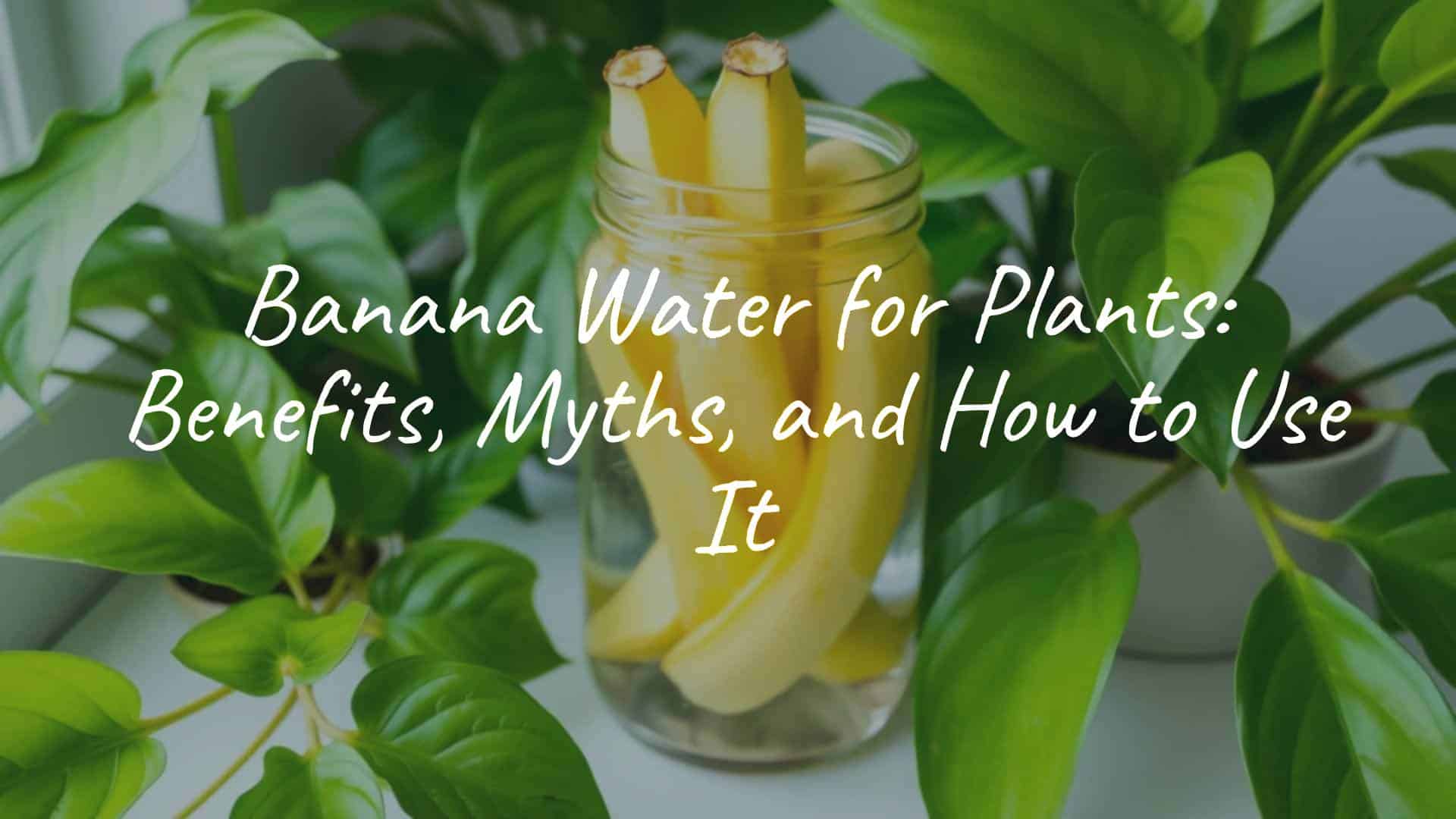
Banana water for plants is a homemade mixture made by soaking banana peels in water. The idea is that useful nutrients from the peels move into the water, and then into your plants when you water them. This method has become very popular with plant lovers, especially on social media, as a way to recycle kitchen scraps and perhaps give houseplants extra nutrients. It sounds like a perfect natural swap for store-bought fertilizer, but scientists and many gardening experts have a more cautious view of how well it really works. This article explains what banana water is, its claimed benefits, common myths, how to make and use it, and which plants might benefit-or not-from it.
What Is Banana Water for Plants?
Banana water is a simple, do-it-yourself liquid fertilizer. It’s basically a kind of “compost tea” made from banana peels soaked in water. The goal is to pull the nutrients from the peels into the water so you can pour that nutrient mix onto your plants.
This approach appeals to many people because:
- It uses kitchen scraps that might otherwise go in the trash.
- It fits with low-waste and eco-friendly gardening habits.
- It feels like a gentle, natural way to feed plants.
The basic process is to cut banana peels into pieces, soak them in water for a few days, then strain out the solids. The liquid that remains is used to water plants. It is often presented as a mild, low-strength nutrient boost that you can use more often than stronger commercial fertilizers, with less risk of overfeeding your plants.
Does Banana Water Benefit Plant Growth?
Whether banana water really helps plants grow better is still debated. Supporters point to the nutrients in banana peels. Doubters point out that there is very little solid research showing that soaking peels in water moves enough nutrients into a form that plants can use.
Key Nutrients in Banana Peels
Banana peels do contain several important nutrients for plants, including:
| Nutrient | Role in Plant Health |
|---|---|
| Potassium (K) | Helps with water movement, enzyme activity, overall growth, flowering, and fruiting; supports tolerance to drought, heat, cold, pests, and disease. |
| Phosphorus (P) | Supports root development and energy transfer in plants. |
| Calcium (Ca) | Strengthens cell walls, supports root structure, and can improve soil structure. |
| Magnesium (Mg) | Central part of chlorophyll, needed for photosynthesis. |
Many people assume that simply soaking banana peels in water will pull these nutrients into the liquid and make a helpful “banana tea” for plants.
Actual vs. Claimed Benefits for Plants
While banana peels are rich in nutrients, the real issue is how much of those nutrients actually move into the water and become usable to plants. Many gardeners and some studies suggest that the amount released into plain soak water is very small.
In soil, microbes and fungi break down organic material and turn nutrients into forms plants can absorb. This breakdown process is weak or missing when peels are just soaked in water for a few days.
Even with this, many home gardeners say they see better flowering, nicer fruit, and greener leaves when they use banana water. These are personal reports rather than controlled studies, but they have helped keep banana water popular. It’s helpful to see banana water as a light supplement rather than a full fertilizer. For plants that need lots of nutrients, banana water alone will likely not meet their needs.
Banana Water Myths and Misconceptions
The hype around banana water has created several myths, especially about potassium and how banana water compares to simply composting or burying banana peels.
Does Banana Water Really Add Potassium?
This is the biggest misunderstanding. Banana peels do contain a lot of potassium, but that doesn’t mean soaking them in water gives your plants a useful dose.
For plants to use potassium from banana peels, microbes and fungi must break the peels down. These microorganisms are mainly found in soil and compost, not in a jar of water with peels sitting in it. So, the potassium that ends up in banana water from simple soaking is limited and not in the same helpful form you would get from well-rotted compost or commercial fertilizer.
Banana water might contribute tiny amounts of micronutrients, but it will not fix a serious potassium shortage. For real potassium problems, a balanced fertilizer or properly composted banana peels will do much more good.
Banana Peels in Soil vs. Banana Water
There is a big difference between:
- Putting banana peels into soil or compost, and
- Making banana water by soaking peels.
When you add peels to soil or a compost bin, they break down over time. Microbes and fungi eat the peels, and as they do, they release nutrients that plants can later absorb. This process slowly feeds the soil with potassium, phosphorus, calcium, magnesium, and more.
However, putting raw peels directly into pots or shallow garden beds can attract pests like rodents and insects, and can smell bad. A better option is to compost the peels first in a separate pile or bin until they are broken down, then mix that compost into your soil.
Compared with composting, banana water from soaking peels holds far fewer nutrients, and those nutrients are less available to plants. It’s easy to make, but not very strong.
How to Make Banana Water for Plants
Even with the questions about its strength, many gardeners still like to make banana water as a natural, low-cost supplement. There are a few main ways to do it, from a simple soak to a fermented version.
Simple Method: Soaked Banana Peels
This is the easiest method. You’ll need:
- Banana peels (organic if possible)
- Clean water
- A jar or bowl with a lid or cover
Steps:
- Cut the banana peels into small pieces, about 0.5-1 inch long, to expose more surface area.
- Place the pieces in a jar or bowl.
- Add water until the peels are covered. A rough guide is 1 part peels to 2 parts water.
- Let the mix sit at room temperature for 2-3 days.
- Strain out the peels and keep the liquid.
- Add the used peels to your compost if you have one, or discard them.
You can then dilute this liquid with fresh water before using it on plants.
Boiled variation: Some people soak the peels for 2-3 days and then boil them for 30-45 minutes. Heating may help break down fibers and release more nutrients. After boiling:
- Strain the liquid.
- Let it cool fully.
- Mix one part banana liquid with about five parts fresh water before use.
Fermented Banana Water Preparation
The fermented method is more involved and usually stronger. It uses sugar to feed microbes and help the bananas break down.
You’ll need:
- Ripe bananas (not just peels)
- Dark brown sugar
- A sealable container
Steps:
- Cut ripe bananas into pieces.
- Mix equal weights of banana and dark brown sugar (for example, 1 lb banana with 1 lb sugar).
- Place the mix in a container and press it down.
- Seal the container loosely (so gas can escape) and leave it at room temperature for about 2 weeks.
- Over time, the mixture will turn into a liquid or syrup.
- Strain this liquid into a clean bottle. This is your concentrate.
To use, dilute about 0.5 oz (14 ml) of this concentrate in 33 oz (1 liter) of water. Use it soon after mixing with water, especially if you have many plants to feed at once.
Tips for Safe DIY Banana Water
- Use organic peels if you can. Bananas grown with pesticides may have chemicals like chlorpyrifos on the skin. You don’t want that in soil for edible plants.
- Keep equipment clean. Wash jars, spoons, and strainers to cut down on unwanted bacteria or mold.
- Watch for insects. Sugary mixes, especially fermented ones, can attract flies and gnats if left open or spilled.
- Smell check. If the banana water smells very bad or “off” (beyond a mild fermented smell), throw it away and make a new batch.
- Always dilute stronger mixes. Fermented banana water and boiled concentrates should be mixed with plenty of fresh water before you use them on plants.
How to Use Banana Water on Plants
Once you have banana water, how you use it matters. The method, amount, and frequency all play a role in how your plants respond.
Best Application Methods
1. Watering the soil
This is the most common way. Use banana water (diluted) just like regular water and pour it around the base of the plant, soaking the root zone. This gives roots a chance to take up any available nutrients.
2. Bottom watering (good for many succulents)
For succulents or plants that prefer not to have water poured on top:
- Fill a tray with about 1 inch (2.5 cm) of diluted banana water.
- Set the pots in the tray for 10-15 minutes.
- Remove the pots and let extra water drain away.
3. Foliar spray
Some people spray banana water on leaves with a spray bottle. Plants can absorb a small amount of nutrients through their leaves, but how much they get from banana water is unclear.
If you try foliar spraying:
- Strain the liquid very well to avoid clogging the sprayer.
- Test on a few leaves first and wait a day or two to see if there is any damage.
- Avoid spraying in full sun to reduce leaf burn.
How Much Banana Water to Add
For the simple soaked banana water, a common approach is to dilute it until it looks like weak tea, then use it as you would normal water.
For banana peel powder mixed with water, one example guideline is:
- Banana peel powder solution: 2 tablespoons of dried banana peel powder in 16 oz (470 ml) of water for one medium pot.
- Fermented concentrate: around 0.5 oz (14 ml) concentrate in 33 oz (1 liter) of water.
Start with a weaker mix than you think you need, watch your plants for any stress, and only then consider slowly increasing the strength.
How Often to Use Banana Water
Because banana water is usually weaker than store-bought fertilizer, many gardeners use it once a week during active growing seasons.
General guidelines:
- Use diluted banana water no more than once a week.
- For other waterings, use plain water.
- In cooler months, when plants grow more slowly, cut back or stop banana water use.
Using it too often can lead to soggy soil and might draw pests, especially indoors.
Which Plants Respond Well to Banana Water?
Reports from home gardeners suggest that some plants seem to benefit more than others from banana water. It is usually seen as safe for many plants that prefer gentle feeding.
Banana Water for Tomato Plants
Tomatoes are often mentioned in discussions about banana water. They are heavy feeders and often run into blossom-end rot, which is linked to calcium problems. Because banana peels contain calcium, some gardeners hope banana water will help with this issue.
Common practice for tomatoes:
- Use diluted banana water once a week as part of the watering routine.
- Combine it with a fertilizer made for tomatoes, which includes balanced N-P-K and micronutrients.
Banana water might give a small extra boost of calcium, magnesium, and trace minerals, but tomatoes usually still need a proper tomato fertilizer for best flowering and fruit set.
Banana Water for Succulents and Houseplants
Succulents generally dislike strong fertilizers. Their slow growth and water-storing leaves make them sensitive to overfeeding. Because of this, some gardeners like banana water as a light feeding option.
Tips for succulents:
- Use only well-diluted banana water.
- Use bottom watering instead of pouring from the top.
- Allow soil to dry out fully between waterings.
Tropical houseplants like pothos, snake plant, monstera, and philodendron are often said to respond well to banana water. Other plants people report success with include:
- Anthuriums
- Orchids
- Bell peppers
- Roses
- Air plants (very lightly misted)
- Ferns
- Okra
For these plants, banana water can serve as a light extra feed between their normal fertilizer applications.
Can Banana Water Harm Plants?
Banana water is often described as harmless, but using it the wrong way can cause problems.
Potential Risks and Overuse Effects
Key concerns include:
- Sugar attracting pests: Fermented banana water or very sweet mixes can draw gnats, fruit flies, and other insects, especially indoors. A small pest problem can grow quickly.
- Pesticide residues: Peels from non-organic bananas may carry pesticides on the skin. Turning these into a soak or “tea” can move some of those chemicals into your plant soil, which is especially worrying for herbs and vegetables.
- Overwatering and soil imbalance: Too much banana water, or mixes that are too strong, can upset the natural balance of soil life and cause waterlogged conditions, stressing roots.
Because of these issues, many gardeners prefer to test banana water outdoors first, watch for insect activity, and use organic peels when possible.
Signs of Plant Stress from Banana Water
Watch your plants after using banana water. General stress signs include:
- Yellowing or browning leaves
- Wilting when soil is still moist
- Stunted growth
- Sudden increase in insects around the plant
- Mold or fungus on the soil surface
If you see these problems soon after using banana water, stop using it and go back to plain water and your usual fertilizer routine. If issues continue, check other factors like light, temperature, and watering schedule, or talk with an experienced gardener.
Also, if your stored banana water smells rotten or very foul, throw it away. Using spoiled liquid can bring harmful bacteria or fungi to your plants and roots.
Frequently Asked Questions about Banana Water for Plants
Here are answers to some common questions people ask about banana water.
Is Banana Water Good for Every Plant Species?
Banana water can be gentle enough for many houseplants and garden plants, but it is not a perfect fit for every species.
- Most leafy houseplants and many vegetables can handle a weak banana water feed once in a while.
- Succulents and cacti need extra care because they are sensitive to moisture and sugars. Use very diluted mixes and bottom watering only, and not too often.
- Plants with high nutrient needs (like heavy-fruiting vegetables or some flowering ornamentals) usually still need a complete fertilizer even if you add banana water.
A safe approach is to test banana water on one or two plants first and watch their response over a few weeks before using it more widely.
Does Banana Water Affect Soil Microbes?
Simple banana water (from soaking peels) does not add many microbes on its own, but it does add organic material and small amounts of nutrients that can feed existing soil life.
Healthy soil life is very important for good plant growth, because microbes help break down organic matter and cycle nutrients. A small, diluted amount of banana water is unlikely to harm this balance and may support it slightly by adding extra food for microbes.
Fermented banana water carries more active microbes from the fermentation process. In small, diluted amounts, this can support soil life. But if you use very sweet or strong mixes too often, you might upset the balance, especially in small pots.
Can I Store Banana Water for Later Use?
Yes, you can store banana water, but it does not keep forever.
Storage tips:
- Keep banana water concentrate in a clean, closed container.
- Store it in the fridge to slow down spoilage.
- Use soaked banana water within about 2-4 weeks.
- Use fermented banana concentrates while they still smell pleasantly sweet or mildly yeasty, not rotten.
Signs it has gone bad:
- Strong, foul odor
- Visible mold growth
- Strange, thick texture or unusual colors
If you notice any of these, throw it out and make a fresh batch. Always keep lids tight to reduce contamination and spills.
Banana water brings together low-waste habits and a love for plants. Even if science has not fully supported the bold claims often seen online, turning kitchen scraps into a simple plant drink can still be satisfying. It helps you see “waste” as a possible resource and makes you pay closer attention to your plants and soil. Whether it gives a big nutrient boost or just a small one, the process of making and using banana water can help you feel more connected to your plants and to natural cycles in your home and garden.











![What to with Scrap Metal? [infographic]?](https://facts-homes.com/wp-content/uploads/2019/07/645413-POPYOV-391-120x86.jpg)