

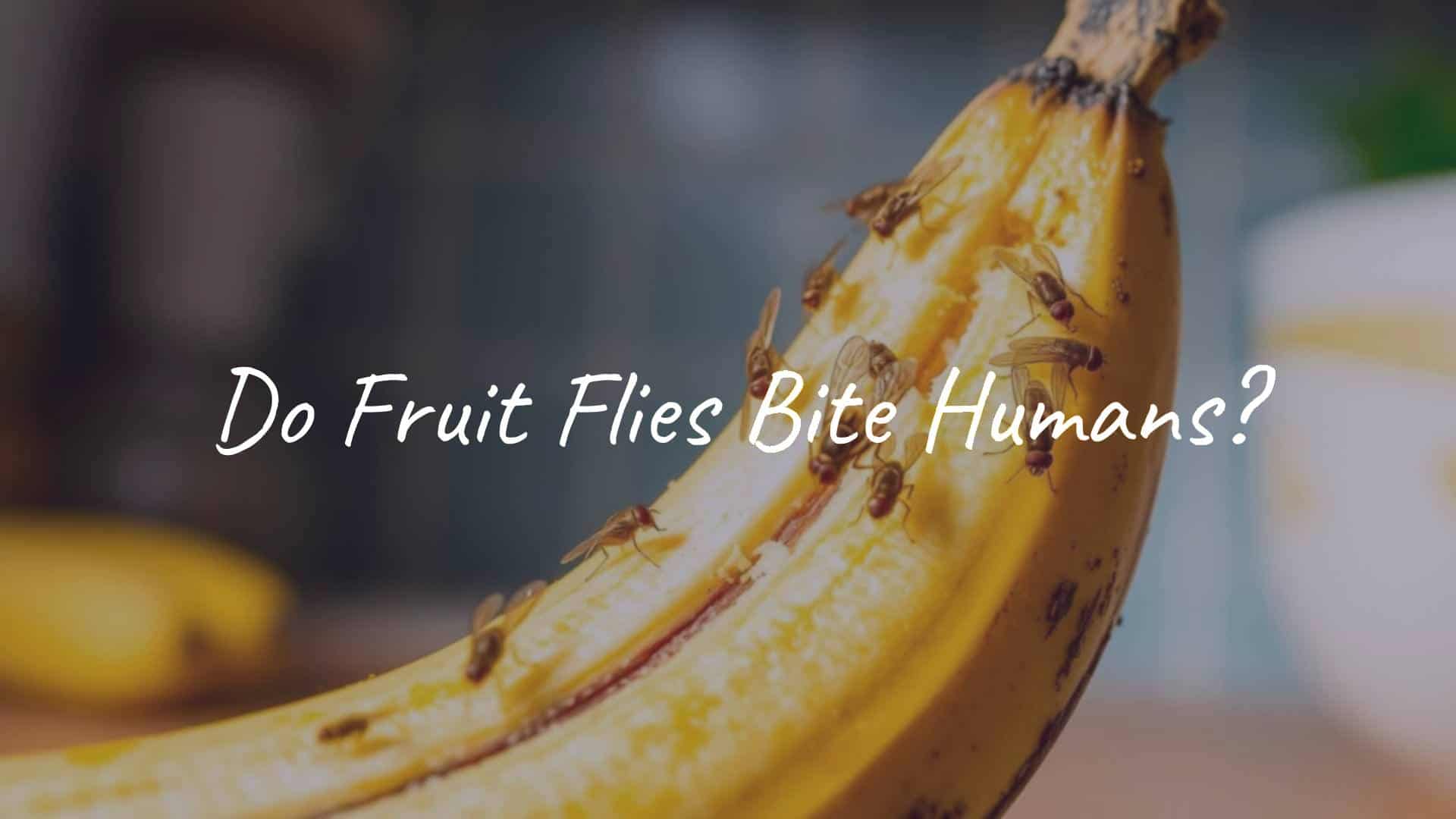
Many people wonder if these tiny, common household pests can actually bite. So, do fruit flies bite? The short answer is no, fruit flies do not bite humans. These small insects, known scientifically as Drosophila melanogaster, do not have the kind of mouthparts needed to pierce human skin or suck blood. They feed on fermenting fruits, vegetables, and other decaying organic material, so they never developed the tools needed for biting people.
Although the idea of a fruit fly bite might make you uncomfortable, their presence is more about annoyance and hygiene than direct harm. They are attracted to the sweet, yeasty smell of rotting or fermenting food and sugary liquids, which is why they gather in kitchens and dining areas. Knowing how they live and what they feed on helps clear up false ideas and lets you focus on real pest control methods instead of worrying about bites that do not happen.

Do Fruit Flies Bite Humans?
This question comes up a lot when these tiny insects suddenly appear around your home: do fruit flies bite humans? The clear answer is no. Fruit flies do not have the body parts needed to bite. Their mouths work like a sponge, soaking up liquids, especially those rich in yeast and fermented sugars. They are not built to pierce skin or drink blood. Unlike mosquitoes and some other flies that are made for blood-feeding, fruit flies are simply not interested in you as food.
This lack of biting ability is an important point, because many people blame fruit flies for mysterious red bumps or itchy spots on their skin. In reality, if you notice skin irritation and think an insect is responsible, it is almost certainly a different pest. Fruit flies are scavengers that look for decaying organic matter. Their contact with humans usually stops at flying around our faces, food, and drinks.
Can Fruit Flies Break Human Skin?
Because of their small size and the way they feed, fruit flies cannot break human skin. Their mouthparts are soft and built to lap up fermented liquids, not to cut or poke holes. An adult fruit fly is only about 0.12 inches long and 0.08 inches wide, with a small, rounded body and clear wings. These features make it clear they are not able to cause a bite that would go through human skin.
If you see small red marks or feel itching, it is very unlikely that a fruit fly is to blame. You should instead think about other common biting insects such as mosquitoes, fleas, bed bugs, or certain types of gnats that really can bite. Fruit flies might land on your skin or food, but this contact is only on the surface and does not involve any breaking of the skin.
Common Myths About Fruit Fly Bites
The belief that fruit flies bite has stuck around for a long time. This is probably because they are so annoying and because people often blame the nearest tiny insect for any skin problem. One popular myth says that fruit flies lay eggs under the skin and cause irritation. This is completely untrue. Female fruit flies lay their eggs on the surface of moist, rotting organic matter, such as overly ripe fruit or old food scraps, so the larvae have something to eat once they hatch. They do not target living tissue.
Another myth is that fruit flies are a kind of biting gnat. While people do use the word “gnat” for many small flies, the common indoor fruit fly species (like Drosophila melanogaster) does not bite. There are other small flies, such as biting midges (often called “no-see-ums”), that do bite and can be mistaken for fruit flies because of their size. Telling these insects apart is important if you want to find the real cause of any biting or skin irritation.

Difference Between Fruit Fly Annoyance and Biting Insects
The difference between the trouble caused by fruit flies and the pain caused by biting insects is large. Fruit flies are mostly just bothersome. Their constant buzzing around food, especially ripe fruits, alcoholic drinks, and sugary spills, can really test your patience. Since they are drawn to the smell of fermentation, seeing them often means there is a food source or breeding spot nearby that needs cleaning up.
Biting insects, on the other hand, actively look for people or animals to feed on. Mosquitoes leave itchy bumps, fleas cause small red bites that often appear in groups, and bed bugs create clear patterns of red, swollen marks. These insects have sharp mouthparts made to pierce skin and drink blood. Fruit flies do not. So, while both fruit flies and biting insects are unwelcome inside your home, the way they affect you is very different: fruit flies bother your food and your peace of mind, while biting insects bother your body.
Can Fruit Flies Pose Health Risks?
Even though fruit flies do not bite, their presence can still be a problem. They can carry germs and spread them to food and surfaces. Fruit flies are attracted to dirty places such as rotting food, trash cans, and drains where old organic material builds up. When they move between these places and your countertops, fresh fruit, or even your toothbrush, they can pick up and spread harmful bacteria.
Studies show that fruit flies can carry bacteria like Salmonella, E. coli, and Listeria, which can cause food poisoning. If these germs land on food that you later eat, they can lead to stomach pain, diarrhea, and, in severe cases, illness serious enough to need hospital care. Fruit flies also reproduce very quickly. A single female can lay up to 500 eggs, so an infestation can grow fast and increase the amount of contamination in a home or food storage area. For these reasons, they are a real concern for cleanliness and food safety.

Can Fruit Flies Cause Skin Irritation?
Fruit flies do not directly cause skin irritation the way biting insects do. They do not inject saliva, venom, or leave any irritating chemical behind through a bite, because they do not bite at all. However, their indirect actions might, in rare cases, play a small role. If fruit flies walk across dirty surfaces covered in bacteria and then land on your skin, there is a small chance they could transfer those germs. For most people, this will not cause visible irritation unless there is a cut, scrape, or special sensitivity.
In most homes, when people notice itchy red bumps where fruit flies are present, the real problem is usually some other pest. Many tiny insects, such as biting midges or even mites, can cause skin irritation that is then wrongly blamed on fruit flies. If you have ongoing or unexplained skin problems, it is wise to think about many possible causes and see a doctor if you are worried, instead of immediately blaming fruit flies.
Frequently Asked Questions About Fruit Flies and Biting
People often have many questions about fruit flies, especially about whether they bite or affect human health. Clearing up these questions helps homeowners deal with these insects in a calm and effective way, without extra fear. Below are some common questions about fruit flies and their non-biting behavior.
Knowing how they behave, what they eat, and what their bodies can and cannot do helps remove confusion about these common pests. While they are definitely annoying, knowing what they cannot do is just as helpful as knowing what they can do when you are trying to manage them in your home.
Why Do People Think Fruit Flies Bite?
The belief that fruit flies bite comes from several sources. One reason is that they are everywhere, especially in warmer weather, so they are an easy thing to blame for any itchy spot that appears. When a tiny flying insect is nearby and you notice an irritation, it is easy for your brain to connect the two, even if they are not related.
Another reason is confusion over names. Many people use the word “gnat” for lots of different small flying insects, including fruit flies. Some gnats, like biting midges, really do bite, so the mix-up makes sense. Without clear knowledge about insect types, it is easy to assume all tiny flies act in the same way. The constant annoyance of fruit flies hovering, landing on food, and flying near your face can also create a mental link between them and harm, even when no biting is taking place.
How to Tell If You Have Fruit Flies or Biting Insects?
Being able to tell the difference between fruit flies and real biting insects is key for using the right pest control plan and for your own peace of mind. You can often tell them apart by how they look, how they behave, and where you find them.
Fruit Flies:
- Appearance: About 1/8 inch long, with a small, rounded body. They usually have bright red or dark eyes. Their bodies are often tan or yellowish-brown, though some may look darker.
- Behavior: They fly in a slow, hovering way and are often seen floating around fruit bowls, sinks, and places where sweet or fermenting material is present. They are mainly attracted to overripe fruit, sugary liquids, vinegar, and bits of organic waste.
- Location: Mostly found in kitchens, dining rooms, near trash cans, or anywhere food is left out. They follow the smell of fermentation.
- Biting: They do not bite.
Biting Insects (e.g., Mosquitoes, Biting Midges, Fleas):
- Appearance: This varies. Mosquitoes are thin with long legs and a long, needle-like mouthpart. Biting midges are very small, often darker, with delicate wings. Fleas are tiny, wingless, and move by jumping.
- Behavior: Mosquitoes make a high-pitched buzzing sound and fly directly in to bite. Biting midges are often found outdoors in damp areas and give a sharp, itchy bite. Fleas live on pets or in carpets and usually bite ankles and lower legs.
- Location: Mosquitoes are usually outside near standing water, but can get indoors. Biting midges mostly live outside. Fleas are linked to pets and can spread through carpets, bedding, and furniture.
- Biting: These insects have sharp mouthparts that can pierce skin and feed on blood, leaving itchy bumps or rashes.

If you are getting bitten, it is very unlikely that fruit flies are the cause. Your efforts should focus on finding the real biting insect and choosing the right way to get rid of it. For fruit flies, the main solution is good cleaning habits and removing the food and breeding sites that attract them.











![What to with Scrap Metal? [infographic]?](https://facts-homes.com/wp-content/uploads/2019/07/645413-POPYOV-391-120x86.jpg)